
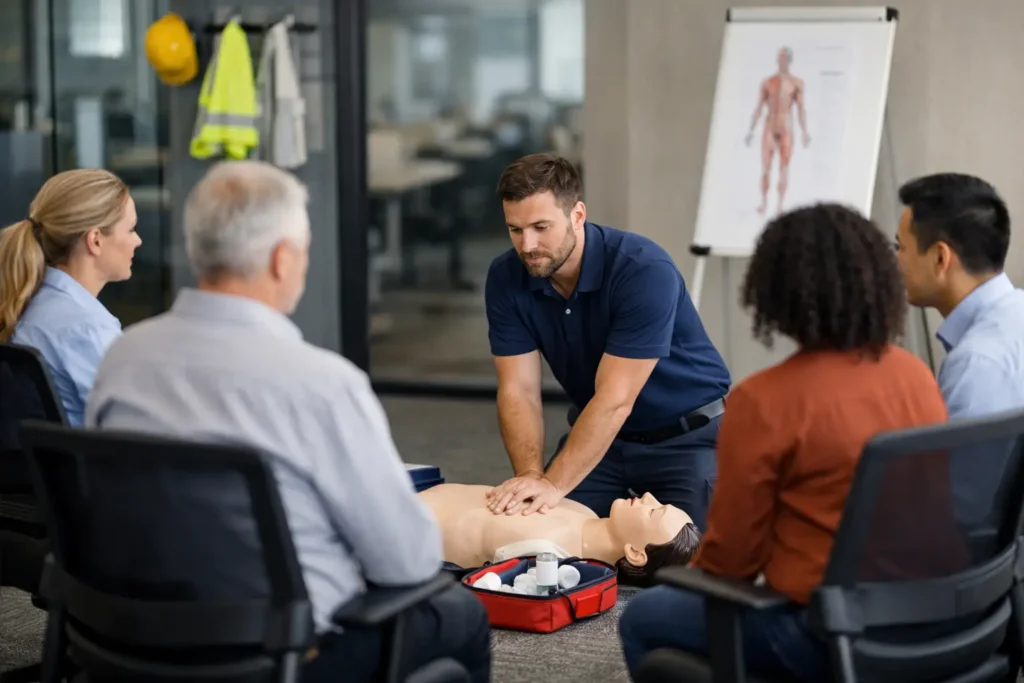
A workplace emergency rarely happens when the most qualified person is on duty, in the right building, and standing next to the right equipment. That is why organizations that schedule group first aid classes are doing more than checking a training box. They are building a response plan people can use under pressure – across shifts, departments, and locations.
For HR leaders, school administrators, church staff, safety coordinators, and operations managers, the challenge is usually not deciding whether training matters. It is arranging it without disrupting operations or leaving gaps in coverage. A thoughtful group training plan makes that process manageable and connects first aid skills with CPR, AED access, and the equipment your people may need before professional responders arrive.
The right class size and course format depend on who will respond and what they may face. An office may need broad coverage among reception, facilities, managers, and floor wardens. A manufacturing site may need trained responders on every shift, with added attention to bleeding control, injuries, and remote work areas. Schools, churches, and athletic programs often need staff and volunteers who can respond to cardiac emergencies involving adults, children, or both.
Begin by identifying the roles that should be trained, then map them against daily schedules. Include supervisors, front-desk personnel, security, coaches, maintenance teams, and anyone responsible for opening or closing the facility. Avoid relying on a small group of employees who all work the same hours or take vacation at the same time.
It also helps to review incidents, near misses, and site conditions. Consider the distance to emergency medical services, the number of visitors on site, physical activity levels, and whether employees work alone. Training should reflect the real environment, not just a generic compliance requirement.
The most effective scheduling process starts several weeks before the proposed training date. First, determine whether you need CPR and AED training with first aid, first aid only, or a customized session that supports a broader workplace response program. Certification requirements, insurer expectations, job duties, and internal policy may all influence that decision.
Next, divide large teams into manageable groups. Smaller sessions give participants more hands-on practice and allow instructors to correct technique. Larger organizations may prefer several classes over multiple dates, especially when production, customer service, or student supervision cannot pause. The trade-off is simple: consolidating everyone into one session can reduce coordination, but staggered sessions usually provide better operational coverage and participation.
When selecting times, account for shift changes, peak customer periods, school calendars, worship services, and planned events. For organizations with 24-hour operations, offering separate day, evening, or overnight sessions is often necessary. Training only the day shift can create a false sense of readiness if an emergency occurs after normal business hours.
Onsite training is often the most practical option for groups because employees learn in the setting where they would respond. Participants can identify AED locations, discuss access barriers, and understand who calls 911, meets responders, or retrieves emergency supplies. Location-based training can also work well when organizations have remote teams or lack suitable space, but the same site-specific discussion should still occur afterward.
Attendance improves when employees know why they are being asked to participate and what the session will involve. Explain the course length, certification expectations, hands-on components, clothing considerations, and whether they will practice CPR skills on manikins or use training AEDs.
Managers should also make it clear that training time is protected. If participants are expected to answer phones, monitor email, or return to the floor midway through class, valuable practice is lost. A designated backup plan for essential duties helps protect the training investment.
First aid training is strongest when it is paired with a clear AED response plan. During a cardiac emergency, people need to recognize the emergency, call 911, begin CPR, retrieve the AED, and use it quickly. Training builds confidence, but confidence drops when employees do not know where the AED is, whether it is accessible, or who is responsible for keeping it ready.
Use the class as an opportunity to walk through your facility’s AED placement. AEDs should be visible, clearly marked, easy to reach, and available during the hours people are present. A device placed behind a locked office door, in an area closed after business hours, or too far from a high-traffic space may not support a fast response.
This discussion is especially valuable in schools, churches, community facilities, and large workplaces where visitors may not know the layout. Consider how someone would find an AED from a gym, sanctuary, cafeteria, warehouse floor, parking area, or athletic field. If the answer is uncertain, the training session has revealed an operational issue worth addressing.
AED readiness also extends beyond placement. Pads and batteries have expiration dates, cabinets may require inspection, and staff turnover can leave nobody assigned to routine checks. A formal AED management process helps organizations track these responsibilities, document inspections, and keep equipment response-ready. Requirements can vary by state, local policy, and organization type, so leaders should confirm the standards that apply to their facility.
One class is not a permanent solution. Certifications expire, employees leave, and new hires arrive with different levels of experience. Instead of waiting until several credentials are near expiration, create a rolling calendar that includes initial training, renewal sessions, and make-up opportunities.
A practical approach is to maintain a centralized roster with course dates, certification expiration dates, job roles, work shifts, and AED program responsibilities. This makes it easier to identify coverage gaps before they become urgent. It also helps when an auditor, regulator, parent organization, or insurance representative asks for documentation.
For larger organizations, assign one internal coordinator to work with the training provider and department leaders. That person does not need to be the medical expert. Their role is to keep scheduling organized, confirm attendance, communicate course details, and ensure that training records are stored where they can be found.
Square One Medical can help organizations coordinate group CPR, AED, and first aid training while aligning instruction with facility equipment and ongoing preparedness needs. A single partner for training and AED program support can reduce the handoffs that often cause expiration tracking, equipment checks, and recertification planning to slip.
After training, ask a few practical questions: Could responders name the closest AED? Do they know who calls 911? Is there coverage on every shift? Can a visitor or new employee find emergency equipment quickly? These questions move the conversation from certificates to readiness.
It is also wise to document lessons from drills, actual incidents, renovations, or staffing changes. A new addition, relocated front office, or expanded parking lot can change AED access and response time. Preparedness should evolve with the facility.
The best time to schedule training is before an emergency forces the issue. Set the date, protect the time, walk the site with your team, and make sure the skills taught in class match the response your organization expects when every minute matters.