
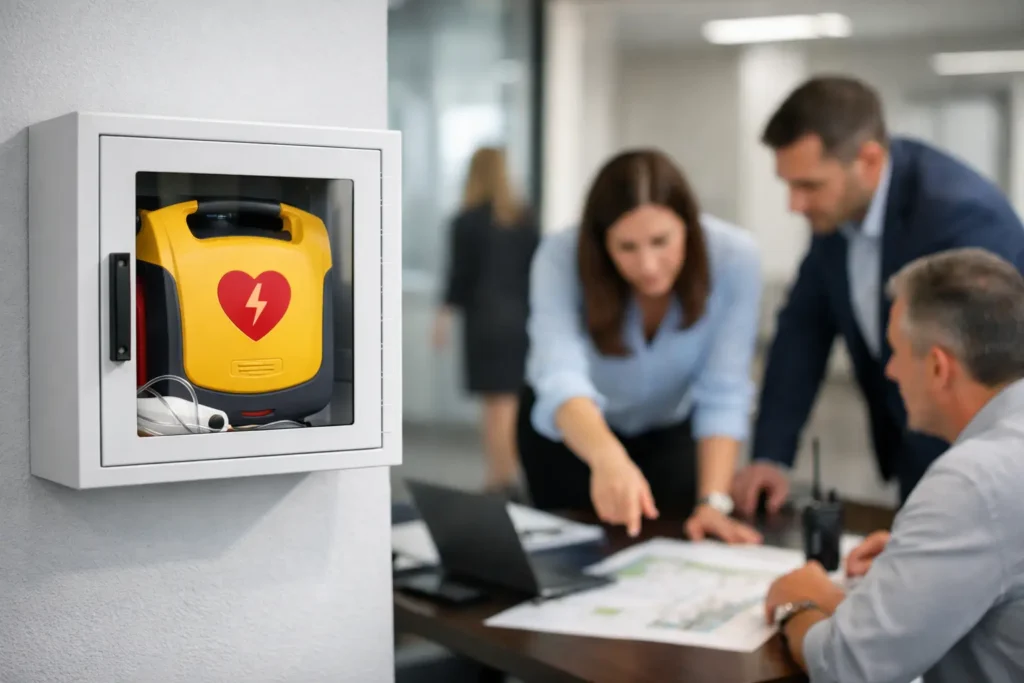
A cardiac arrest can happen in a conference room, on a production floor, in a school gym, or near a crowded reception area. The difference between having an AED somewhere in the building and having one that can be used quickly is often placement. This AED placement guide for workplaces helps safety leaders make practical decisions that support faster response, clear access, and ongoing readiness.
An AED program is not simply an equipment decision. It connects facility layout, employee training, emergency procedures, signage, inspections, and replacement supplies. When those pieces work together, employees are more likely to act with confidence during a high-stakes emergency.
The first question is not, “Where will the AED cabinet look best?” It is, “How quickly can a responder retrieve the AED and return to the person in distress?” For sudden cardiac arrest, every minute matters. A workplace AED should be positioned so it can be reached, brought to the victim, and used without unnecessary delays.
A practical benchmark is to locate AEDs within about a three-minute round trip from the areas they serve. That calculation must account for real conditions, not just a straight line on a map. Consider locked doors, stairwells, security checkpoints, elevators, machinery, long hallways, and the time it takes to locate the cabinet.
Large campuses, multistory offices, warehouses, schools, and manufacturing facilities may need more than one AED. A single device at the front desk may be appropriate for a small office, but it is rarely enough for a large building or a facility with separated work zones.
Begin with the places where employees, visitors, students, or patrons spend the most time. Common priorities include lobbies, cafeterias, fitness areas, break rooms, auditoriums, gyms, production areas, and security stations. In a church, consider the sanctuary, fellowship hall, classrooms, and any sports or activity space. In a school, athletic facilities and areas used after regular school hours deserve special attention.
Next, look at factors that may increase the likelihood of an emergency or complicate access. A physically demanding work area, a location with an older visitor population, or a facility that hosts large public events may require additional coverage. The right number and placement of AEDs depends on the building, occupancy, hours of operation, and emergency response time in that community.
An AED cannot help if staff members do not know where it is or cannot get to it. Devices should be placed in visible, well-marked locations that remain accessible whenever the facility is occupied. Hallway intersections, main entrances, near elevators, and central common areas are often more effective than a manager’s office or a locked supply room.
Place the AED in a wall cabinet or designated mounting location with clear AED signage above and around it. Directional signs are especially valuable in larger facilities, where a responder may be coming from another wing or floor. If your building has a public-address system, security team, or emergency communication process, include the AED location in those procedures.
Avoid locations that create preventable delays. Cabinets should not be behind a reception desk that is unattended after hours, inside a room that may be locked, or near equipment that blocks access. Outdoor or high-temperature environments may require a cabinet and storage plan designed for local conditions. The device must also remain protected from damage, tampering, and moisture without becoming difficult to retrieve.
AED placement works best when it is part of a written workplace response plan. Employees should know who calls 911, who retrieves the AED, who begins CPR, and who meets EMS at the entrance. In a small team, one person may perform several of these tasks. In a larger facility, designated response teams can divide responsibilities.
Training makes placement decisions more useful. During CPR and AED training, have staff practice identifying the closest device and moving through the actual facility. A classroom scenario is helpful, but a short walk-through can expose problems that a floor plan misses, such as poor signage, blocked corridors, or doors that require a keycard.
Consider the shifts that operate in your building. An AED program should not depend entirely on one trained person who works weekdays. Make sure employees on evening, overnight, weekend, and event shifts understand the response process. For sites with visitors or contractors, staff should also know how to direct others away from the scene while emergency care is underway.
A well-placed AED needs consistent oversight. Pads and batteries have expiration dates, cabinets may need inspection, and the device must be ready after an emergency or training use. Assign a program coordinator or safety team member to conduct regular checks and document them.
A reliable inspection routine should confirm that the AED status indicator shows readiness, the cabinet is accessible, required supplies are present, and signage remains visible. Check for expired or damaged electrode pads, confirm that the battery is within date, and make sure rescue accessories are stocked according to your organization’s plan.
This is where AED management support can reduce administrative strain. Organizations with several devices, multiple facilities, or frequent staffing changes benefit from expiration tracking, inspection reminders, equipment updates, and a clear record of each AED’s location. Readiness is easier to maintain when it is managed as an ongoing program rather than a once-a-year task.
AED placement should be reviewed whenever your workplace changes. Renovations, new departments, expanded production lines, a relocated reception area, or a newly opened fitness room can all change response routes. The same is true when an organization grows from one building to several locations.
After any drill or actual emergency, ask a few direct questions: Was the AED found quickly? Could responders access it without a key or delay? Did staff know who was calling 911? Was the route clear? These answers can lead to simple but meaningful improvements, such as adding a directional sign, relocating a cabinet, or providing refresher training.
For organizations across Pennsylvania, Ohio, West Virginia, New Jersey, and Maryland, Square One Medical can help connect AED placement, hands-on training, and ongoing program management into one practical readiness plan. The goal is not to place a device merely to check a box. It is to give employees and visitors a real chance at fast, confident action when every second counts.
A thoughtfully placed AED sends a clear message to everyone in your facility: emergency preparedness is planned, maintained, and taken seriously before help is needed.