
Now for a limited time, trade in your old AED for a generous rebate toward a new unit!
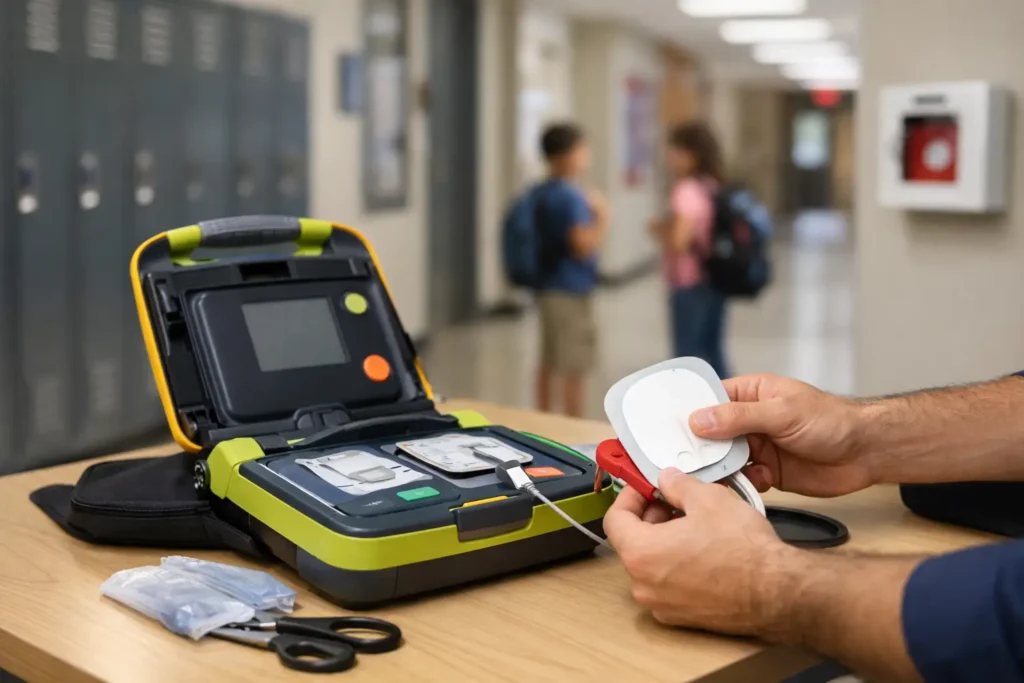
A school AED can only help when it is ready to use. That means more than mounting a device in a visible cabinet. Knowing how to maintain school AEDs means building a routine that keeps the unit accessible, its supplies current, and the people around it prepared to act without delay.
For school administrators, nurses, athletic directors, and safety teams, AED maintenance should be part of the campus emergency readiness program – not a task remembered only after an inspection or a medical emergency.
The first step is simple: every AED needs a named owner. In many schools, responsibility gets spread among the front office, facilities, athletics, health services, and security. When everyone is generally aware of the AEDs, no one may be specifically accountable for checking them.
Assign a primary AED coordinator and a backup for each campus or building. Their role is not necessarily to perform every inspection personally. Rather, they make sure inspections happen, records are maintained, replacement supplies are ordered, and changes in the school environment are addressed.
This person should know where every AED is located, which staff members have access to it, and whether its placement still makes sense. A device near a gym may be ideal during school hours but less useful if evening events are held in a separate stadium, auditorium, or field house.
Most modern AEDs run automatic self-tests, and their status indicator provides a quick visual sign that the unit is ready. That feature is valuable, but it does not replace a routine physical check.
A monthly inspection is a practical standard for most schools. During the check, confirm that the AED is in its assigned location, visible, unobstructed, and easy to remove from its cabinet or case. Check the device status indicator according to the manufacturer instructions. A green readiness symbol or other normal status display generally indicates the unit has passed its self-test. A warning light, audible chirp, message screen, or service indicator requires prompt follow-up.
The inspection should also confirm that the AED is protected from damage, moisture, extreme temperatures, and unauthorized removal. Portable units used for athletics, field trips, or outdoor events deserve extra attention because they are moved more often and face greater exposure to rough handling and weather.
An AED may appear ready while its pads or battery are approaching expiration. These components have manufacturer-set dates and need replacement even if the device has never been used. Adult pads, pediatric pads when included in the program, batteries, and rescue kits should all be tracked.
AED pads are single-use. If the AED has been used in an emergency, opened during a training exercise, or exposed to contamination, replace the pads and any used items in the rescue kit immediately. The device may also store event data that needs to be preserved or downloaded according to school policy and medical direction.
Create a central inventory that records the following information for each unit:
A simple spreadsheet can work for a small campus, but a dedicated AED management process reduces the chance that an expiration date is missed as a school grows or manages multiple buildings. Automated reminders can be especially helpful before the start of a new school year, athletic season, or summer program.
Documentation is what turns an AED check into a dependable program. Keep inspection records in a location the AED coordinator and school leadership can access. Records show that the school is actively maintaining its equipment, but their larger value is operational: they make it easier to spot recurring issues, missing supplies, or devices that need service.
If an inspection identifies a problem, do not leave the AED in service without a plan. Mark the issue, notify the responsible coordinator, and arrange for replacement supplies or manufacturer service. If the device must be removed, consider temporary coverage for that area of campus. Depending on the layout, that may mean relocating another unit, placing a backup AED nearby, or ensuring staff understand the closest available device location.
After any AED use, the school should complete a post-event review. Replace pads, inspect the battery and device status, restock gloves and other kit contents, and document the return-to-service date. The response team may also need support after a stressful event, so the review should include staff well-being as well as equipment readiness.
AED placement is not a one-time decision. Enrollment, renovations, sports schedules, building access, and after-hours activities can change response needs. A unit locked inside an office after dismissal may not serve families at a basketball game. An AED placed near the main entrance may be too far from a remote playground or athletic field.
Schools should review placement at least annually and whenever the facility changes. The goal is to make AEDs available quickly to students, staff, visitors, and community members. Devices should be clearly marked, accessible during the activities they are intended to cover, and placed where trained responders can locate them without searching.
For larger campuses, a response-time assessment can help identify gaps. Consider gyms, cafeterias, auditoriums, stadiums, buses, career and technical classrooms, and spaces used for community events. The right number and location of AEDs depends on the building layout, daily population, and how quickly a responder can reach a device and return to the patient.
An AED program is stronger when staff know what the equipment does and where it is located. School nurses, coaches, administrators, security personnel, teachers, and event staff should understand the emergency response process. CPR and AED training gives people practical confidence, but a brief orientation for all staff can also reduce confusion during an emergency.
Practice should include who calls 911, who retrieves the AED, who meets emergency medical services, and who contacts the school nurse or administrator. Schools with multiple buildings or large athletic programs may need slightly different response plans for each area.
Do not assume a certified staff member will always be closest to the emergency. Modern AEDs are designed to guide rescuers with clear prompts, and quick access matters. Training more people across departments and shifts helps prevent a response plan from depending on one individual.
The most reliable programs tie AED maintenance to existing school routines. Schedule monthly checks, set advance reminders for expiration dates, and review placement before major events and each new school year. Include AED readiness in safety committee meetings, athletics planning, and facility walkthroughs.
Square One Medical helps organizations coordinate AED equipment, expiration tracking, placement planning, and CPR/AED training so readiness is easier to manage across the entire school environment.
A well-maintained AED is a quiet sign that a school has planned for its community on an ordinary day, long before someone needs help on an extraordinary one.