
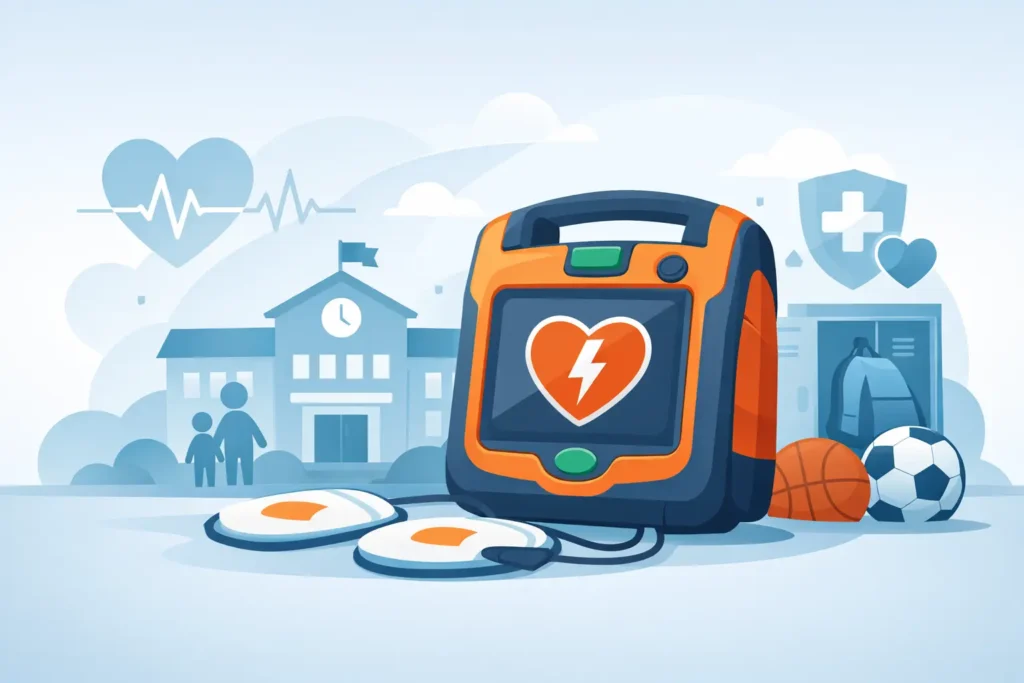
A school nurse gets called to the gym. A coach is waving for help. Students are gathering, staff are moving fast, and every second matters. In that moment, the best AED for schools is not the one with the longest feature list. It is the one your staff can grab quickly, use confidently, and trust to work without hesitation.
That is why choosing an AED for a school should never come down to price alone. K-12 campuses, private schools, colleges, childcare centers, and athletic facilities all have different risk profiles, staffing patterns, and building layouts. A good fit means balancing ease of use, durability, pediatric readiness, ongoing maintenance, and support after the purchase.
Schools need equipment built for real-world use by real people, not just medical professionals. In most cases, the person using the AED will be a teacher, front office staff member, coach, athletic trainer, custodian, or campus security team member. That means the device should be simple, direct, and calm under pressure.
Clear voice prompts matter. So do visual cues, because emergencies are noisy and stressful. The best units guide rescuers step by step, from pad placement to shock delivery to CPR coaching. That reduces hesitation and helps staff stay focused when adrenaline is high.
Pediatric capability is another major factor. If your campus serves younger children, you need an AED that can support pediatric rescues with the proper pads or a child mode, depending on the model. Some schools overlook this detail and assume any AED will cover every age group equally. It depends on the model and accessories, so this is something worth checking early.
Durability also matters more in schools than many buyers expect. AEDs may be mounted in hallways, gym entrances, athletic buildings, cafeterias, or portable classrooms. They may be exposed to dust, heat, cold, or frequent movement for events and sports. A school AED should hold up well and remain ready between inspections.
Ease of use is the first priority, but it should not be the only one. The best school AEDs usually combine a few practical strengths.
Fast rescue guidance is essential. Devices that analyze heart rhythm automatically and deliver clear prompts reduce confusion for untrained or infrequently trained responders. CPR feedback can also be helpful, especially in schools where staff turnover is common and confidence levels vary.
Pad and battery management is another major issue. Consumables expire, and many schools do not have a full-time person dedicated to AED checks. If a device is simple to inspect and supported by a reliable management process, that lowers the risk of finding expired pads during an emergency.
Visibility and readiness checks are often overlooked. A clear status indicator makes routine inspections easier for office staff, facilities teams, or school nurses. If someone can walk by and confirm readiness in seconds, compliance becomes much more realistic.
For some campuses, connectivity and program management support are worth serious consideration. If you manage multiple buildings or district-wide placements, tracking expirations and replacements manually can become inconsistent. A structured AED management approach helps schools stay ready without relying on memory or spreadsheets alone.
Not every part of a school has the same needs. The front office, gymnasium, football field, and early childhood classroom all present different response challenges.
For academic buildings, the best choice is usually a straightforward, highly intuitive AED with strong voice prompts and visible readiness indicators. These locations often rely on general staff responders, so simplicity carries a lot of weight. If the campus serves elementary or middle school students, pediatric readiness should be built into the planning.
Athletic programs often need a more rugged setup. Portable AEDs with a durable case and fast deployment are especially important near fields, tracks, and gyms. Cardiac emergencies during sports can happen with little warning, and the AED may need to travel quickly to the patient rather than wait in a fixed hallway cabinet.
In these settings, response time usually matters more than advanced extras. A strong placement strategy can be just as important as the brand or model.
If you are equipping multiple buildings, standardization becomes valuable. Using the same AED model across a district can simplify training, inspections, pad replacement, and staff familiarity. There is a trade-off, though. A single model may not be ideal for every environment, especially if one campus has major athletic facilities and another serves only younger students.
That is where a consultative approach helps. Sometimes one device platform works well across the board. Other times, a mixed placement plan makes more sense.
A well-chosen AED will still fall short if it is too far away. Schools should think in terms of response time, not just building coverage. If an AED is mounted in the front office but the emergency happens on the far athletic field, that placement may not be enough.
High-priority locations usually include gymnasiums, cafeterias, nurse offices, front offices, athletic facilities, auditoriums, and areas used for after-school programs. Buildings with stairways, detached wings, or portable classrooms may need more than one unit. The goal is simple: get the AED to the patient fast.
Schools also need to think beyond the regular school day. Evening games, weekend events, summer camps, and community use can all change who is on site and how quickly staff can respond. The best AED for schools is part of a broader emergency response plan, not just a box on the wall.
An AED purchase should not end at delivery. Schools need staff who know where the devices are, how to access them, and what to do before EMS arrives. Even the easiest AED works better when responders have practiced with it.
This is one reason many schools prefer a partner that can support both equipment and training. When CPR and AED instruction align with the devices on site, staff confidence usually improves. It also makes onboarding new team members easier across front office staff, coaches, teachers, and administrators.
Ongoing support matters just as much. Pads expire. Batteries need replacement. Policies need review. Staff assignments change. A school that buys an AED but does not have a management process can gradually lose readiness without noticing it.
The most common mistake is buying based only on lowest upfront cost. A cheaper unit may still be the right fit, but only if it supports your student population, staffing model, and maintenance plan. A low purchase price can become expensive if replacements, inspections, or training gaps create problems later.
Another mistake is underestimating placement needs. One AED for an entire campus may satisfy a budget line, but it may not support a fast response in practice. Large campuses, sports programs, and separate buildings often need more coverage.
Schools also sometimes forget pediatric accessories, replacement schedules, or alarmed cabinets. None of these details are complicated, but they do need to be planned. The strongest AED program is the one that stays easy to maintain year after year.
If you are comparing options, start with a few practical questions. Who will most likely use the AED first? What ages are on campus? How many buildings and activity spaces need coverage? Will the device stay in one place or travel to events? Who will track expirations and inspections?
Those answers usually narrow the field quickly. From there, focus on ease of use, pediatric readiness, durable placement, and long-term support. For many schools, the best solution is not just a device. It is a program that includes training, placement guidance, maintenance planning, and a clear process for staying compliant and rescue-ready.
Square One Medical works with organizations that need both the equipment and the structure behind it, which is often exactly what schools need most. When a district, private school, or childcare center has one reliable source for AED selection, training, and ongoing support, preparedness becomes much easier to manage.
The right AED should give your staff one less thing to worry about. When an emergency happens, confidence comes from knowing the device is ready, the team has been trained, and the plan makes sense before anyone hears that first urgent call for help.