
Now for a limited time, trade in your old AED for a generous rebate toward a new unit!
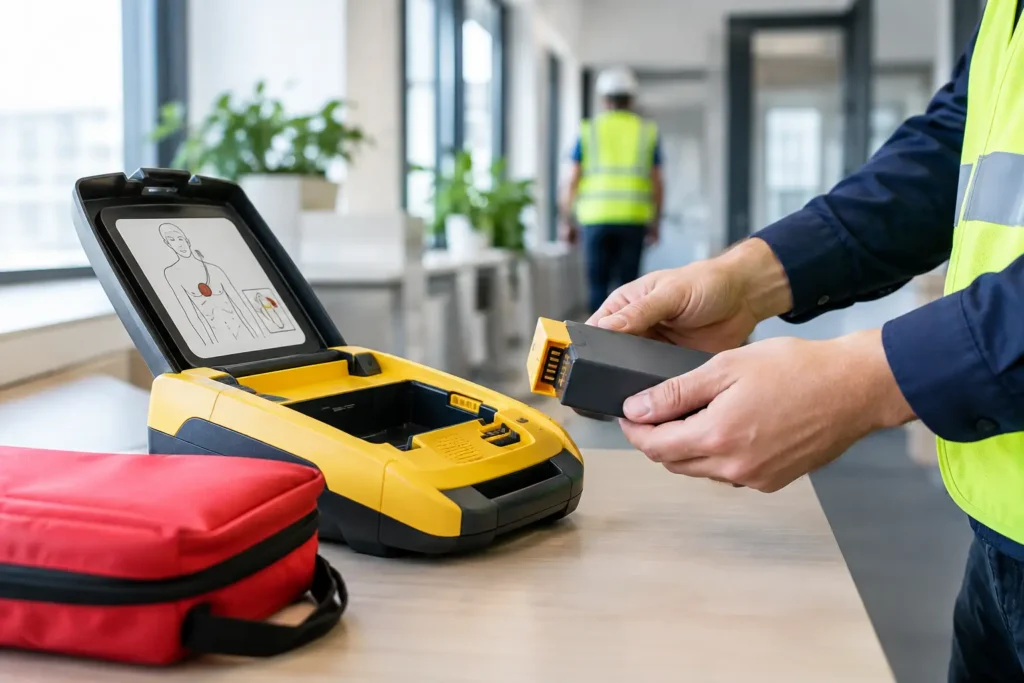
An AED can be mounted in a visible cabinet, included on an emergency map, and checked off during a safety walk-through, yet still be unavailable when someone collapses. AED battery lifespan is a central part of readiness because the battery powers the device’s self-tests, screen, voice prompts, charging system, and shock delivery. For the person responsible for safety at a workplace, school, church, or public facility, that makes battery tracking an operational responsibility, not a minor maintenance detail.
A dependable AED program treats every device as a system. The unit, pads, battery, cabinet, signage, staff training, and inspection process all need to work together. A battery that reaches its replacement date without anyone noticing can turn a well-intentioned preparedness plan into a preventable gap.
AED battery lifespan varies by manufacturer, model, battery type, installation date, and how the device is used and stored. Many AEDs use long-life lithium batteries designed for several years of standby service. That does not mean every battery will last the same number of years in every setting.
The date printed on a battery package may refer to its shelf life before installation. Once a battery is placed in an AED, the relevant date is usually the manufacturer’s installed-by or replace-by guidance for that specific device. These dates should not be treated as interchangeable. A battery that has spent time installed in an AED may have a different expected service period than an unopened battery stored in a supply room.
Environmental conditions also matter. AEDs kept in temperature-controlled offices, classrooms, and worship spaces generally face fewer challenges than devices placed in unconditioned warehouses, athletic fields, vehicles, or exterior cabinets. Extreme heat and cold can reduce performance, particularly when temperatures persist for long periods. High humidity, dust, vibration, and exposure to weather may also affect the overall condition of the AED and its accessories.
Use is another factor. An AED performs routine self-tests, which consume a small amount of power over time. If the device is used in an emergency, turned on for training or troubleshooting, or has repeated alert conditions, battery capacity can be affected. After an actual rescue event, the AED should be promptly inspected, its event data handled according to the organization’s protocol, and any used or affected supplies replaced.
A replacement date is essential, but it is not the only sign that deserves attention. Most modern AEDs conduct automatic self-tests and use a status indicator, readiness light, or display to signal whether the device is prepared for use. A green indicator or “ready” display is reassuring. A flashing alert, red symbol, audible chirp, blank display, or service message requires timely follow-up.
Do not assume a device is ready simply because the battery has not reached its listed replacement date. A failed self-test can point to a battery problem, pad issue, internal fault, or other condition that needs service. Likewise, do not remove a working battery just to inspect it unless the manufacturer’s instructions call for it. Repeatedly opening the unit can create avoidable problems, including improperly seated components or missed readiness indicators.
The best practice is to follow the AED manufacturer’s instructions for the exact model in your facility. A program manager should record the battery part number, installation date, expected replacement date, and inspection status. That record gives your organization a clear answer when staff members change, locations expand, or an incident raises questions about equipment readiness.
Organizations often lose track of AED consumables because the work is assigned informally. Someone checks the device “when they remember,” but there is no named owner, calendar reminder, or documentation. A more reliable approach is to make AED inspection part of a defined program.
Assign a primary coordinator and a backup. The primary coordinator can complete scheduled inspections, while the backup ensures continuity during vacations, staffing changes, or busy periods. For multi-site organizations, each location should have a local contact, with central oversight of expiration dates and inspection records.
A monthly visual check is a practical baseline for many organizations, though the manufacturer’s recommendations and your internal policies should guide the schedule. During the inspection, verify the readiness indicator, cabinet accessibility, battery date, pad expiration date, spare supplies, and the condition of the device and signage. Confirm that nothing blocks the AED cabinet and that staff know where the unit is located.
For larger facilities, digital tracking can reduce missed dates. A simple asset log may be sufficient for one or two devices. Schools, manufacturers, churches with multiple buildings, campuses, and organizations with several locations may benefit from centralized AED management that sends expiration reminders and keeps records in one place. The goal is not paperwork for its own sake. It is making sure a responsible person receives notice before a battery or pad becomes a problem.
Replace AED batteries according to the manufacturer’s recommended schedule, even if the device still appears ready. Waiting for an alert or a complete failure creates unnecessary risk and may leave the facility without an available AED while a replacement is located and installed.
Planning ahead also avoids a common operational issue: discovering multiple expirations at once. If an organization installed several AEDs during the same month, their batteries and pads may require replacement around the same time. A forward-looking tracker allows the safety team to budget, schedule service, and coordinate replacements before deadlines arrive.
When a replacement battery is installed, document the new installation date and the next anticipated replacement date immediately. Check that the battery is fully seated, close the AED as directed, and confirm the device completes its readiness check. If the status indicator does not return to a ready condition, consult the manufacturer’s instructions or contact a qualified AED program support partner.
It is also wise to review the pads at the same time. Pads have their own expiration dates and may need replacement after use, even if they remain within date. Some devices use pediatric settings or separate pediatric pads, so facilities serving children should confirm that the appropriate accessories are available and clearly identified.
Where an AED is placed influences how easy it is to reach and how well it holds up between inspections. The device should be visible, clearly marked, accessible during operating hours, and located where people can retrieve it quickly. It should also be kept within the environmental limits specified by its manufacturer.
For an office, that may mean a central hallway near common areas. For a school, it may mean coverage near gyms, cafeterias, athletic spaces, and large gathering areas. Churches should consider sanctuary areas, fellowship halls, classrooms, and outdoor events. Industrial facilities may need placement based on travel distance, shift coverage, and higher-risk work zones.
An AED in a locked office, behind stacked supplies, or in a location subject to extreme temperatures may be technically present but operationally weak. If an exterior or vehicle-based placement is necessary, select the cabinet, environmental protection, and inspection process appropriate to that setting. Placement decisions should account for the building layout and the realities of how people move through the space.
Staff do not need to be technicians to recognize an AED status alert or report a missing cabinet seal. CPR and AED training helps employees, volunteers, coaches, teachers, and response team members become more comfortable with the equipment they may need to use. It also helps them understand why a battery date or warning signal deserves immediate attention.
Training and equipment management are strongest when they are coordinated. A facility may have trained responders, but their confidence is undermined if they are unsure whether the AED is maintained. Conversely, a fully maintained device is less valuable if no one knows its location or hesitates to use it. Regular practice, clear emergency response roles, and visible equipment create a more capable response culture.
Square One Medical helps organizations connect hands-on training with AED program management, including support for tracking batteries, pads, and readiness needs. That kind of coordinated approach is especially useful for organizations managing multiple devices or locations.
The next time your team reviews emergency equipment, do not stop at confirming that an AED is on the wall. Check its status indicator, verify the battery and pad dates, confirm who owns the next inspection, and make sure the people nearby know how to respond. Those small, scheduled actions help keep a lifesaving device ready for the moment it is needed.