
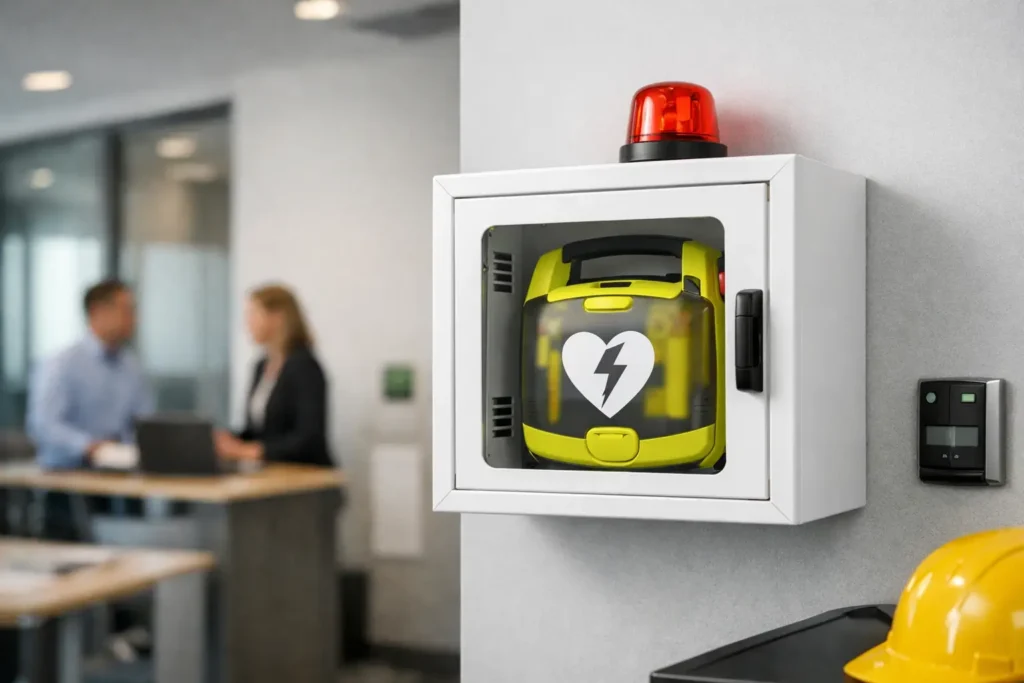
When a cardiac emergency happens, nobody wants to waste time figuring out where the AED is, whether it is secure, or if someone has already opened the cabinet. That is where an aed cabinet with alarm earns its place. For organizations responsible for staff, students, visitors, or congregants, the cabinet is not just storage. It is part of the response system.
An AED program works best when every piece supports fast action. The device matters, the training matters, and placement matters just as much. A cabinet with an alarm adds another layer of readiness by making the AED easy to find while drawing immediate attention when it is accessed.
In a real emergency, people respond to cues. A visible cabinet tells responders where the AED is located. An audible alarm tells nearby staff that the cabinet has been opened and that help may be needed. That can speed up the overall response, especially in larger facilities where front office staff, security teams, coaches, ushers, or floor supervisors may not see the event happen.
The alarm is also useful outside of an emergency. If the cabinet is opened unnecessarily, staff know to check the device, confirm supplies are intact, and make sure the AED is returned to service. For schools, churches, offices, manufacturing sites, and community buildings, that extra awareness can reduce the chance of finding a missing pad set or an unreported issue later.
There is a practical balance here. An alarm should call attention to the event without making access difficult. In most settings, the right cabinet supports quick retrieval first and security second.
Not every cabinet fits every environment. A small administrative office may need something simple and highly visible. A school gym, industrial facility, or church campus may need a more durable option that can handle heavier traffic and more varied conditions.
A cabinet should be easy to spot from a distance. Clear labeling, a recognizable AED marking, and placement along a normal travel path all matter. If staff need to walk into a back room, unlock an office, or search through a medical closet, response time suffers.
Wall-mounted cabinets in common areas often make the most sense, but placement should always follow the reality of your building. The best location is the one your team can reach quickly and remember under stress.
Most alarmed cabinets use a local audible alarm that sounds when the door opens. That simple feature can be enough for many organizations. In some facilities, especially those with large campuses or established emergency action plans, teams may want cabinet access tied into broader notification procedures.
The key question is not whether the alarm sounds impressive. It is whether the alert supports your response plan. If no one nearby will hear it, placement may need to change. If the environment is already noisy, visual awareness and staff training become even more important.
AEDs vary by model, and cabinets should fit the unit comfortably with room for accessories. Pads, a rescue kit, gloves, scissors, a razor, and a barrier mask are often stored with the device. A cabinet that is too tight can make retrieval awkward. One that is too large can look empty and lead to shifting or disorganization.
This is one reason a program-based approach helps. The cabinet should match the AED, the supplies, and the setting rather than being chosen as an afterthought.
Indoor office conditions are different from school hallways, police facilities, recreation areas, or manufacturing floors. Some cabinets are better suited for clean, climate-controlled spaces, while others are built for more demanding environments.
If the AED is placed in a high-traffic area, durability matters. If the site deals with dust, temperature swings, or frequent public access, cabinet design matters even more. The goal is always the same – protect the AED without slowing down access.
An AED cabinet with alarm is most effective when it is tied to a broader preparedness plan. That means staff know where the AED is, who responds, what happens when the cabinet is opened, and how equipment checks are handled afterward.
For example, if a church has an AED in the fellowship hall and another near the sanctuary, ushers and staff should know which one serves which area. If a school places AEDs near the gym and front office, coaches, nurses, and administrators should all understand their roles. If a manufacturing site installs units across multiple departments, supervisors should know how to confirm readiness after any cabinet opening.
A cabinet does not replace training. It supports training by making the equipment more visible and easier to access in the moment that counts.
One of the most common problems is choosing cabinet placement based on convenience for installation instead of emergency access. Another is assuming the alarm alone solves accountability. It helps, but someone still needs to inspect the AED, monitor pad and battery dates, and confirm the unit is ready after use or accidental access.
Another mistake is creating too much friction. If the cabinet is difficult to open, poorly labeled, or placed behind obstacles, even a well-maintained AED may not be reached quickly enough. Security has a place, but in most public and workplace settings, speed and visibility should lead the decision.
Most organizations benefit from an alarmed cabinet, but they are especially useful in shared spaces where many people pass by and where emergencies may be witnessed by someone with no formal safety role. Schools, churches, fitness areas, office lobbies, community centers, and multi-shift workplaces are good examples.
They are also valuable in buildings where the AED needs to be highly visible to visiting staff, substitute personnel, volunteers, or event attendees. In those settings, the cabinet becomes part of the building’s emergency communication.
Square One Medical often works with organizations that need the cabinet decision to fit into a larger plan for AED placement, training, and ongoing readiness. That is usually the right way to approach it. The cabinet is not a standalone item. It is part of how your team responds under pressure.
The best aed cabinet with alarm is the one that makes your AED easier to find, faster to access, and simpler to manage in the real world. It should fit your building, your staff workflow, and your emergency response plan without adding confusion.
If your organization is reviewing AED placement or updating its preparedness program, the cabinet deserves more attention than it usually gets. In a cardiac emergency, clear access and immediate awareness can make the difference between hesitation and action. That is exactly what your emergency equipment should support.