
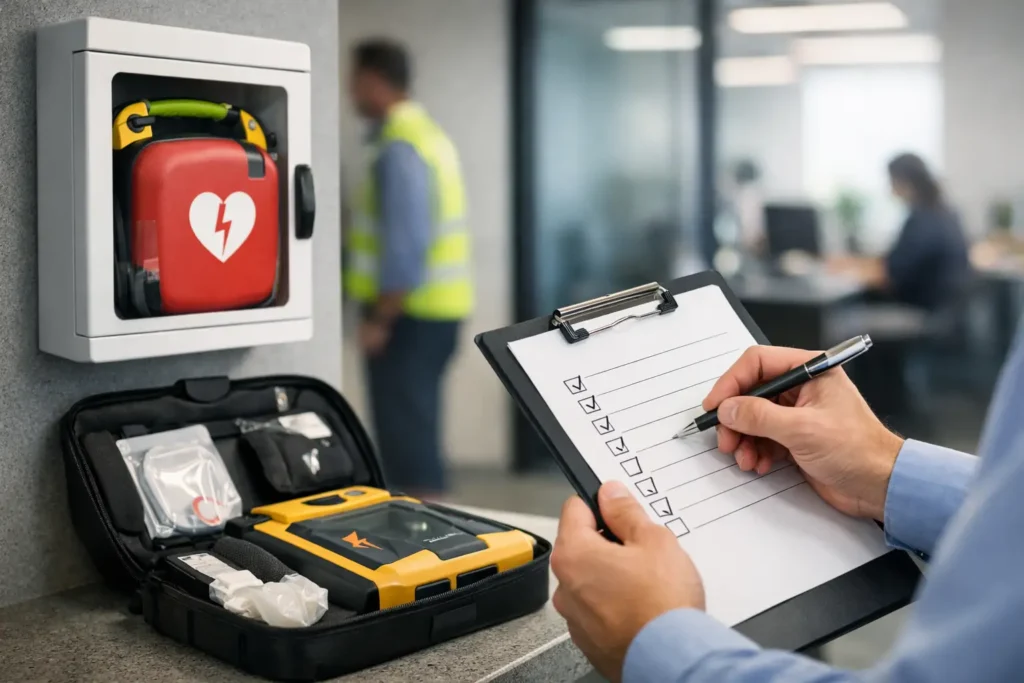
A cardiac emergency does not wait for a staff meeting, a budget cycle, or a better time to get organized. When an AED is needed, the real question is not whether you own one. It is whether your program is ready to work without delay. That is where an aed readiness checklist guide becomes useful – not as paperwork, but as a practical way to confirm your team, equipment, and response plan are all aligned.
For schools, workplaces, churches, and community facilities, readiness usually breaks down in predictable places. The AED may be mounted, but pads are expired. Staff may be trained, but no one knows who checks the device. A response plan may exist, but it is buried in a binder. Good AED programs are built around simple habits that make emergency action easier under pressure.
A strong AED readiness checklist guide starts with availability. The device must be easy to access, clearly marked, and placed where people can reach it quickly during an emergency. Placement depends on the size and layout of the facility, foot traffic, and where higher-risk activities happen. A school gym, manufacturing floor, sanctuary, front office, and athletic field may all need different coverage decisions.
Just as important, the AED should be visible and not tucked into a locked room or hidden behind furniture. If your team has to stop and ask where it is, that is a readiness problem. Cabinets, wall signage, and consistent placement across multiple buildings help reduce hesitation when seconds matter.
The next part is device status. Most AEDs are designed to perform self-checks, but that does not remove the need for routine human oversight. Someone should verify the status indicator, confirm pads and batteries are within date, and make sure the rescue kit is complete. This includes items such as gloves, scissors, a razor, a barrier mask, and absorbent materials if your protocol calls for them.
The most reliable programs assign ownership. If everyone is responsible, no one is responsible. One person or department should oversee inspections, replacement schedules, and documentation. In many organizations, that falls to HR, facilities, school health staff, risk management, or a safety coordinator. What matters is clarity.
Inspection frequency can vary based on your setting. A busy public facility may benefit from more frequent checks than a low-traffic office. A church with weekend services and weekday programs may need a different routine than a law enforcement agency or industrial site. The right schedule depends on use patterns, staffing, and internal compliance requirements, but monthly visual checks are a common baseline.
Documentation matters more than many teams expect. If an AED is inspected regularly, that record supports accountability and helps identify issues before they become emergencies. It also helps after an event, when leadership may need to confirm maintenance history, supply replacement, or response follow-up.
Training is another area where readiness can look better on paper than it does in practice. Having certified staff is a good start, but response confidence fades without refreshers. Teams should know where the AED is, who calls 911, who begins CPR, and who retrieves additional emergency supplies. Short drills can reveal weak spots quickly, especially in larger campuses or multi-building operations.
One of the most common gaps is assuming installation equals readiness. It does not. An AED on the wall is only one part of a working response program. Without maintenance tracking, trained responders, and a clear internal process, a device can create a false sense of security.
Another gap is inconsistent coverage across locations. Organizations with multiple buildings often place one AED in the main facility and assume it covers the whole campus. In practice, travel time matters. If it takes too long to retrieve the device and return to the victim, placement should be reevaluated.
There is also the issue of turnover. Staff change roles, volunteers come and go, and trained responders leave. If your checklist does not include training updates and role reassignment, the program can drift out of readiness without anyone noticing. This is especially common in schools, houses of worship, and offices where emergency planning may be one responsibility among many.
Consumables are another easy miss. Pads and batteries expire on schedule whether the AED is used or not. After any use, replacement needs to happen right away, and the device should be returned to service with a documented post-event check. If there is no defined process for this, readiness can quietly lapse.
The best checklist is short enough to be used consistently and specific enough to catch real problems. It should include the device location, inspection date, status indicator check, pad expiration, battery status, rescue kit contents, signage visibility, and any corrective action taken. If your organization has more than one AED, each device should have its own record.
It also helps to connect the checklist to a broader response plan. Staff should know where incident reports go, who to notify after an event, and how replacement supplies are ordered. Some organizations manage this internally. Others use AED program management support to keep expirations, updates, and readiness tasks from slipping through the cracks. That can be especially useful for facilities with multiple devices or limited administrative bandwidth.
For organizations trying to improve preparedness, this is often where a full-service partner adds value. Training, equipment oversight, and ongoing support work better when they are coordinated instead of handled by separate vendors. Square One Medical often helps organizations simplify that process so AED readiness becomes part of normal operations rather than an annual scramble.
An AED program does not need to be complicated to be effective. It needs to be visible, maintained, assigned, and practiced. If your checklist helps your team answer those four points with confidence, you are in a much stronger position to respond when it counts.
A ready AED is not just a device on the wall. It is a sign that your organization has taken responsibility for the people who walk through its doors.