
Now for a limited time, trade in your old AED for a generous rebate toward a new unit!
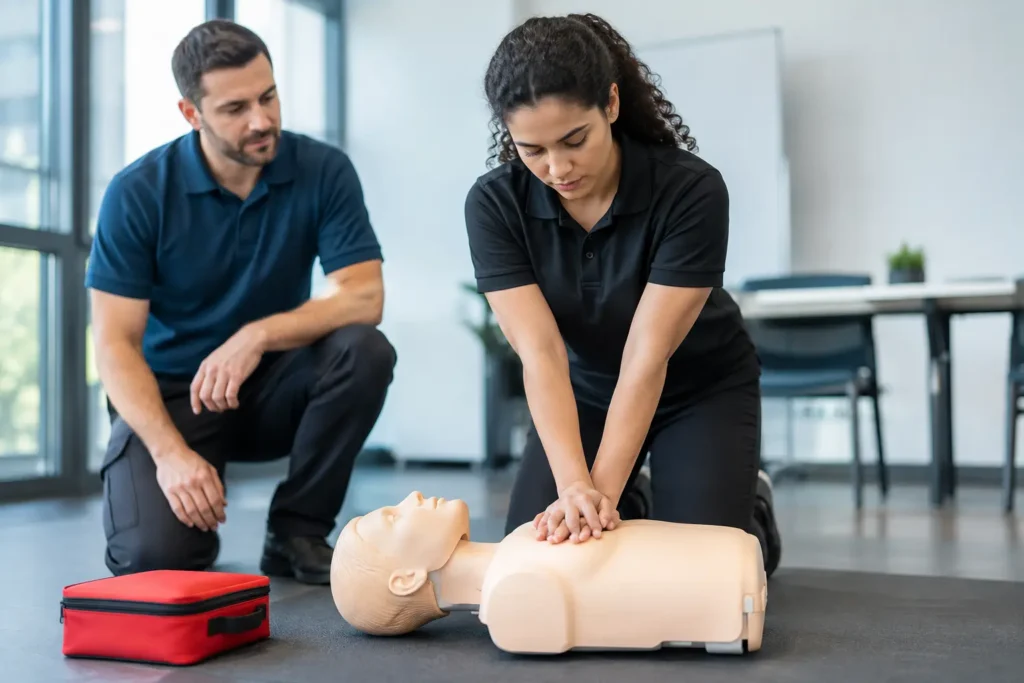
A cardiac emergency does not wait for a convenient moment, a fully staffed shift, or the next safety meeting. When a staff member, student, visitor, or congregant collapses, the response in the first few minutes can shape the outcome. That is why choosing the best CPR training provider is not simply an administrative task. It is a decision about whether your people will recognize an emergency, begin high-quality CPR, retrieve the AED, and work together with confidence.
For organizations, the right provider should do more than issue completion cards. They should help make emergency readiness practical across your facility, your team, and your AED program.
A quality CPR course teaches more than a sequence of steps. Participants need hands-on practice that reflects the pressure and realities of an actual emergency. They should leave knowing how to assess an unresponsive person, call for help, perform effective chest compressions, provide rescue breaths when appropriate for the course, and use an AED without hesitation.
Look for a provider that offers instructor-led, hands-on training with adequate time for each participant to practice skills. Videos and online modules can support learning, but they cannot fully replace feedback on compression depth, rate, hand placement, or AED pad placement. A capable instructor corrects technique in the moment and helps people understand why each action matters.
The best fit also depends on your environment. A school may need staff prepared for adult, child, and infant emergencies. A manufacturing facility may need first aid and bleeding-control training alongside CPR and AED instruction. A church may need flexible scheduling that works around services and volunteer availability. The course should match the risks your people actually face.
Certification is often required by employers, licensing bodies, insurers, or organizational policy. Confirm that the course meets the credentialing requirements relevant to your staff roles. Ask which training curriculum is being used, how long certification remains valid, and whether participants receive credentials promptly after successful completion.
Still, a card alone is not proof of readiness. A provider should make the learning experience clear, engaging, and memorable for people with different levels of confidence. Some participants will have years of clinical experience; others may be anxious about touching a manikin or using an AED for the first time. Good instruction meets both groups where they are without making the session feel rushed or overly technical.
It is also worth asking how the provider handles large groups. If 30 employees attend a class but only have limited opportunities to practice, your organization may be checking a box rather than building capability. Appropriate instructor-to-student ratios, enough training equipment, and a well-organized class plan make a measurable difference.
CPR and AED readiness belong together. High-quality CPR keeps blood moving, while an AED can analyze the heart rhythm and, when indicated, deliver a shock. Training that treats the AED as a quick add-on misses the operational questions your team will face during a real event.
Your provider should teach employees where AEDs are located, who is expected to retrieve one, and how to continue compressions while another responder prepares the device. They should also explain that modern AEDs are designed to guide rescuers with clear voice and visual prompts. The goal is not to turn employees into medical professionals. It is to make sure they can act quickly until emergency medical services arrive.
For facility leaders, this is also the right time to review AED placement. An AED stored in a locked office, behind a reception desk after hours, or far from high-traffic areas may not be accessible when it is needed. Placement should account for the size of the building, daily occupancy, public access, response time, and higher-risk areas such as gyms, cafeterias, production floors, or athletic spaces.
A dependable training partner can help you connect training decisions with AED program management. That includes checking that cabinets are visible, signage is clear, devices are registered when required, and supplies such as pads and batteries are monitored before expiration.
Before selecting a provider, ask how they tailor courses for organizations like yours. A thoughtful answer should go beyond a generic course catalog. The provider should be able to discuss onsite training, group scheduling, participant minimums, equipment needs, and the best course format for your workforce.
Ask whether training can be delivered at your location. Onsite sessions reduce travel and make it easier for teams to learn in the environment where they would respond. They can also support a useful walkthrough of AED locations, emergency exits, first aid supplies, and internal response procedures.
Ask what happens after the class. Reliable support is especially valuable for organizations managing multiple locations, rotating staff, or recurring compliance requirements. You may need help scheduling renewal training, maintaining records, adding new-hire sessions, or updating your emergency response plan after a facility change.
Finally, ask whether the provider can support the full preparedness picture. CPR training is essential, but it works best as part of a coordinated program that includes accessible AEDs, maintained emergency equipment, trained responders, and a clear plan for contacting 911 and guiding responders to the scene.
Budget matters, particularly when training a large workforce. But the lowest advertised price can become costly if it leads to inconvenient scheduling, crowded classes, incomplete hands-on practice, delayed credentials, or little support after training day.
Compare the total value instead. Consider instructor experience, course quality, onsite convenience, administrative support, and whether the provider can help maintain the emergency equipment your team is being trained to use. A single trusted partner often reduces the burden on HR teams, office managers, school administrators, and safety coordinators who are already managing competing responsibilities.
There are situations where a basic renewal class may be all you need, particularly for a small group with a well-maintained AED program. But if your organization is adding AEDs, opening a new site, updating policies, or training a large team for the first time, a more consultative provider is worth seeking out.
The right CPR training provider helps your organization move from good intentions to a response plan people can use. Staff should know not only how to perform CPR, but also how to call for help, get the AED, direct emergency responders, and support one another during a stressful event.
Square One Medical helps organizations bring training, AED placement, and ongoing AED management into one practical preparedness program. The best next step is to look at your facility through the eyes of a first responder: Could someone find the AED, use it, and get help without losing valuable time? If the answer is uncertain, that is a useful place to begin.