
Now for a limited time, trade in your old AED for a generous rebate toward a new unit!
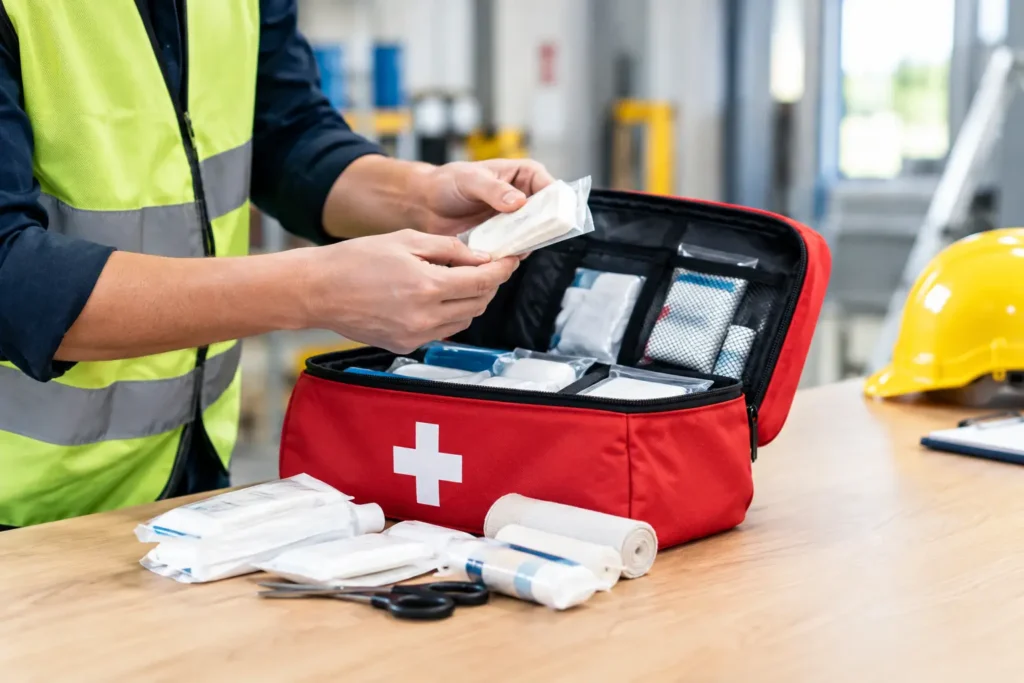
A first aid kit can look fully stocked and still leave your team unprepared. A box of adhesive bandages may be intact, but expired antiseptic wipes, compromised sterile dressings, or an out-of-date AED battery can create delays when every second matters. Organizations should replace expired first aid supplies as part of a scheduled readiness process, not after an emergency reveals a gap.
For workplace managers, school administrators, church leaders, and safety coordinators, the goal is simple: make sure the equipment people reach for in an emergency is ready to perform as expected. That takes more than checking whether a cabinet is on the wall. It requires ownership, routine inspections, accurate records, and a plan for replacing time-sensitive items before they become a problem.
Expiration dates are not merely a manufacturer formality. Many first aid products depend on sterile packaging, stable ingredients, reliable adhesives, or chemical effectiveness. Over time, those protections can change.
Antiseptic products and burn treatments may lose effectiveness after expiration. Sterile gauze, trauma dressings, and eye pads can no longer be assumed sterile if their packaging has deteriorated, become wet, or been punctured. Adhesive bandages and medical tape may not adhere properly. Medications, if your organization is authorized to keep them in a kit, require especially careful review because their storage and replacement needs vary.
The same principle applies to AED programs. AED electrodes and batteries carry expiration dates because their materials and stored energy must be dependable during a cardiac emergency. A device may perform self-tests and still need new pads or a battery according to the manufacturer’s stated schedule. An AED cabinet, signage, rescue kit, and inspection process all support the same outcome: fast access to a functioning response system.
Start with a complete inspection rather than replacing only the first item you notice. This approach prevents a cycle where one expired product is replaced while several others remain overdue in the same kit.
Check each item against its labeled expiration date, then look closely at its condition. Remove supplies with damaged seals, discolored packaging, leaks, moisture exposure, broken containers, or missing labels even if the printed date has not passed. If an item has been opened during a previous incident or training exercise, replace it unless it is specifically designed for repeated use and can be properly maintained.
Pay close attention to high-use and high-consequence supplies. These commonly include disposable gloves, CPR masks, antiseptic wipes, antibiotic ointment packets, burn gel, sterile gauze, roller bandages, trauma dressings, tourniquets, instant cold packs, eye wash, and splints. The contents of each kit should reflect the risks at that location. A manufacturing facility, athletic program, school health office, and church campus may need different supplies and different quantities.
For AEDs, verify the device status indicator according to the manufacturer’s instructions, confirm that the pads and battery are within date, and make sure the unit remains visible and accessible. Also inspect the cabinet alarm or light, if installed, and confirm that the rescue kit contains needed items such as gloves, scissors, a razor, a CPR barrier, and a towel. Replace any used or missing accessories promptly.
The strongest emergency readiness programs make inspection a routine operational task rather than an informal reminder. Assign a primary person to check each kit and AED, along with a backup who can complete the task when the primary contact is away. In larger facilities, assigning responsibility by area often works better than putting the entire building on one person’s checklist.
Monthly visual inspections are a practical baseline for many organizations. The person assigned can confirm that the kit or AED is present, accessible, undamaged, and visibly complete. A more detailed review of expiration dates can occur monthly, quarterly, or on a schedule that matches the number of kits, their usage, and the manufacturer requirements for equipment in the program.
Keep a written or digital inspection log. Record the date, inspector, equipment location, status, products replaced, and any follow-up needed. This provides continuity when staff members change roles. It also helps identify patterns, such as a frequently depleted athletic field kit or an AED location that is repeatedly blocked by furniture or seasonal displays.
A useful practice is to flag supplies that will expire in the next 60 to 90 days. Replacing items before the deadline prevents a rushed response to a missed date and gives the organization time to consolidate replacements. For multi-site organizations, a centralized inventory list can reduce duplicate orders and make it easier to maintain consistent kit contents across locations.
One common mistake is treating first aid kits as static purchases. A kit is a starting point, not a permanent solution. Its contents will be used, moved, damaged, or expire. Another mistake is storing supplies in places that are too hot, cold, damp, or difficult to reach. Storage conditions can affect product integrity before the printed expiration date.
Organizations also sometimes maintain an AED without treating it as a full program. An AED alone is valuable, but a strong program includes appropriate placement, routine readiness checks, trained responders, emergency action planning, and clear communication about who calls 911 and who retrieves the device. If the AED is in a large school, church, or workplace, placement should account for travel time, building layout, locked doors, and public access hours.
Training is part of the maintenance plan. Staff should know where kits and AEDs are located, how to report a used or missing item, and what to do during an emergency. CPR, AED, and first aid training build confidence, but that confidence depends on equipment that is ready when needed.
Replacing supplies does involve cost, but waiting until an incident exposes an expired or missing item carries a much greater operational risk. The right approach depends on your facility size, the number of kits and AEDs, the activities on site, and whether your team has time to manage inspections internally.
For some organizations, a designated safety coordinator can handle the process with a simple calendar and inventory sheet. Others benefit from AED program management and ongoing equipment support, particularly when they operate several locations or have staff turnover. A full-service partner can help track AED pad and battery dates, update equipment records, coordinate replacements, and align training with the equipment installed at each site.
Square One Medical helps organizations connect their training, first aid supplies, and AED readiness into one practical response plan. Whether you oversee a single office or several public-facing locations, the most useful next step is to open every kit and AED cabinet, check the dates, and assign responsibility for the next inspection. Preparedness becomes manageable when it is treated as a routine responsibility rather than a last-minute project.