
Now for a limited time, trade in your old AED for a generous rebate toward a new unit!
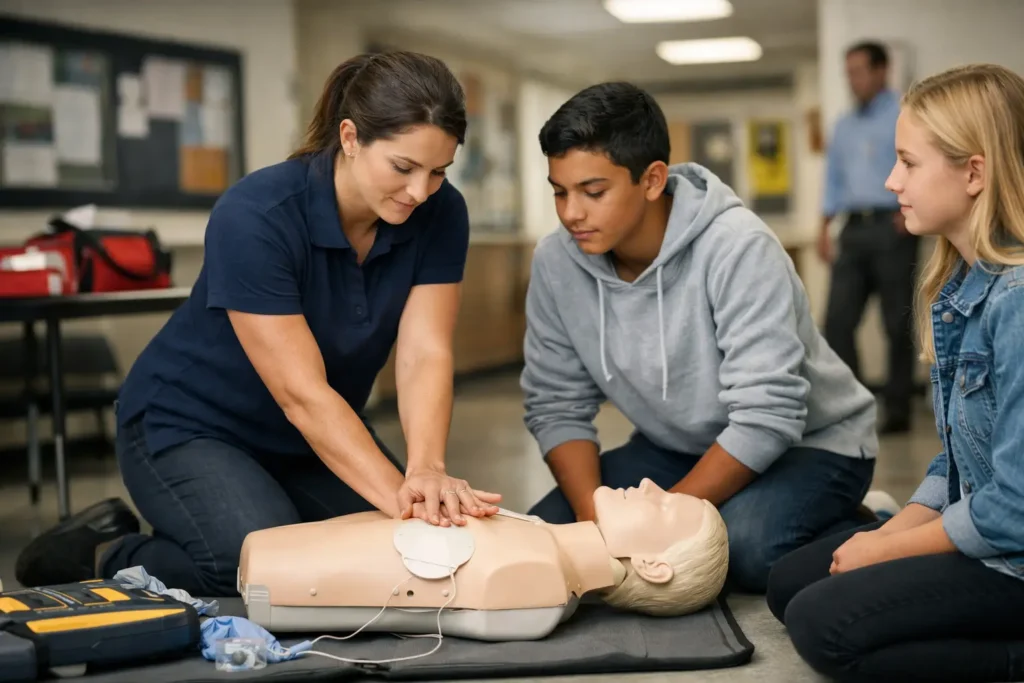
A medical emergency at school rarely happens when the nurse, athletic director, principal, and trained staff member are all standing in the same room. It may happen during dismissal, in a gymnasium, on a playground, at a concert, or on a bus trip. A practical school CPR training guide helps administrators prepare people, equipment, and procedures so the first minutes are not left to chance.
For schools, CPR training is not simply a compliance task or a date on a staff development calendar. It is part of a larger emergency response system that includes rapid 911 activation, accessible AEDs, clear communication, and regular equipment oversight. The goal is straightforward: give staff the confidence to act quickly while help is on the way.
A useful plan begins with the school’s layout and daily routines. A small elementary school may need a different approach than a multi-building high school with athletic fields, auditoriums, vocational spaces, and after-school programs. Consider where people gather, where visitors enter, how long it takes to reach remote areas, and who is present outside normal classroom hours.
Sudden cardiac arrest can affect students, staff, parents, spectators, and contractors. It can occur during sports, but it is not limited to athletic events. Choking, severe bleeding, opioid exposure, allergic reactions, and other emergencies also require a coordinated response. CPR training gives staff a critical foundation, but it works best when the school has assigned roles and appropriate response equipment nearby.
A written emergency action plan should identify who calls 911, who retrieves the AED, who begins CPR, who meets responding EMS personnel, and who communicates with the front office. One person may need to fill more than one role in a small school. In a larger campus, teams should be assigned by area and shift.
Not every employee has the same emergency responsibilities, but schools benefit when training reaches beyond a small group of designated responders. School nurses, administrators, coaches, physical education teachers, security personnel, front-office staff, maintenance teams, transportation personnel, and activity leaders are all strong candidates for CPR, AED, and first aid training.
Training should reflect the people staff serve. Schools commonly need adult, child, and infant CPR skills, especially when early childhood programs, family events, or community programs operate on campus. Staff should practice recognizing unresponsiveness, calling for help, delivering high-quality compressions, using an AED, and responding to choking. Hands-on practice matters because an emergency does not allow time to remember a video lesson.
A school does not need every staff member trained at the same certification level to be well prepared. It does need enough trained people across buildings, schedules, and activities to avoid gaps. For example, a trained daytime office team does little for an evening basketball game if no trained staff members are present. Review coverage for arrival, dismissal, lunch, recess, practices, performances, field trips, and summer programs.
CPR keeps blood moving, but an AED can analyze a heart rhythm and, when appropriate, deliver a shock that may restore a normal rhythm. In a suspected cardiac arrest, every minute matters. Schools should place AEDs where they can be retrieved quickly, not merely where there is empty wall space.
Placement decisions should account for travel time, building entrances, gyms, cafeterias, auditoriums, athletic areas, and outdoor events. A large campus may require multiple devices. A locked office, a distant storage room, or an AED cabinet that staff cannot locate defeats the purpose of having the equipment available.
Visibility is equally important. AED cabinets should be clearly marked, and staff should know their locations without needing to search a map during an emergency. If the school hosts public events, consider whether visitors can identify the AED as well. Many schools also benefit from portable response equipment for athletic trainers, security staff, or off-campus activities.
An AED program is more than device placement. Pads and batteries have expiration dates, cabinets may need inspection, and device readiness indicators should be checked on a consistent schedule. Assign a specific person or team to oversee these tasks, with a backup when staff members are absent or change roles. AED program management helps prevent a common and avoidable problem: discovering expired supplies only after an emergency occurs.
Certification training builds individual ability. Drills build team coordination. Both are necessary.
At least once or twice a year, conduct a short medical emergency drill that tests the school’s real process. Use a realistic location, such as a gym bleacher section or playground, and observe what happens from the first recognition of the emergency through EMS arrival. How quickly is 911 called? Does someone retrieve the correct AED? Can staff direct responders to the scene? Does the front office know what to say to emergency personnel?
The purpose is not to create pressure or criticize staff. It is to expose practical obstacles before they matter. A drill may reveal that the AED is too far from the athletic field, that an employee cannot access the cabinet after hours, or that a substitute teacher does not know whom to contact. Those findings are valuable because they give the school specific improvements to make.
After each drill, document the outcome and update the response plan. Staff turnover, construction, schedule changes, and campus growth can all alter an otherwise sound plan.
Emergency readiness becomes easier to manage when schools track CPR certifications, AED inspections, pad replacements, battery dates, trauma kit supplies, and drill schedules in one coordinated system. Scattered spreadsheets and informal reminders create unnecessary risk, particularly when responsibility changes hands.
Set recurring review dates before the school year begins and again before major athletic or public-event seasons. Include a process for onboarding new staff, replacing trained personnel who leave, and notifying key staff when equipment is moved or serviced. The right schedule depends on the school’s size and programs, but consistency matters more than complexity.
Schools should also understand applicable district policies, state requirements, and local EMS expectations. Requirements can vary, especially for athletic programs and AED registration. A qualified training and AED program partner can help administrators organize training, equipment placement, and ongoing readiness without forcing the school to manage separate vendors and disconnected deadlines.
Even well-trained employees can hesitate if they are unsure who has authority during an emergency. Leadership can reduce that hesitation by making expectations clear: call 911, begin care within the limits of training, retrieve the AED, and follow the emergency action plan. Staff do not need to diagnose cardiac arrest to begin a response when someone is unresponsive and not breathing normally.
Training should reinforce that AEDs are designed to guide rescuers with clear voice prompts. Staff should not wait for a nurse, coach, or administrator to arrive before getting the device and starting CPR. Early action creates the best chance for a positive outcome.
Square One Medical helps schools bring CPR, AED, first aid, equipment placement, and ongoing AED program support into a coordinated preparedness plan. The strongest school response is the one staff can carry out on an ordinary busy day, when the right people know what to do and the lifesaving equipment is ready when they reach for it.