
Now for a limited time, trade in your old AED for a generous rebate toward a new unit!
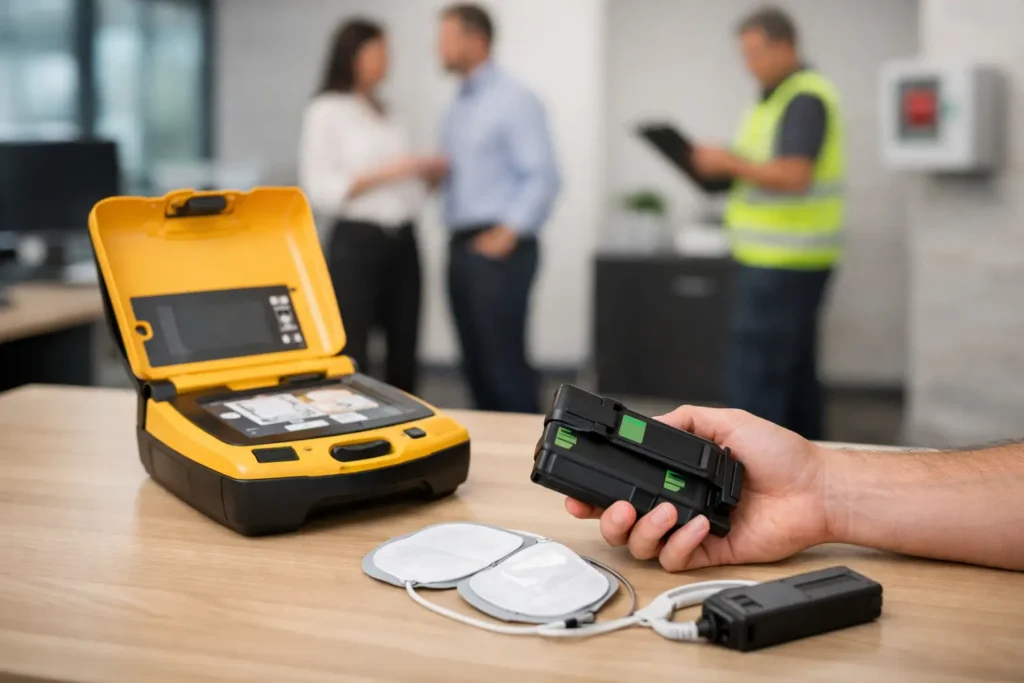
An AED mounted on the wall can create a false sense of security if its battery is overdue. During a cardiac emergency, the device must power on, analyze the heart rhythm, and deliver a shock if advised. Knowing when to replace AED batteries is not a minor maintenance task. It is a core part of keeping an organization’s emergency response program ready for the moment it is needed.
For workplaces, schools, churches, athletic facilities, and public-facing organizations, the best approach is to follow the manufacturer’s expiration date while also building routine checks into the AED program. A battery can look fine from the outside and still be unable to provide the dependable power an AED requires.
Replace an AED battery by the manufacturer’s stated expiration date, even if the AED has never been used. Most AED batteries have a standby life of approximately two to five years, depending on the model, battery type, storage environment, and self-testing demands of the device. The date is typically printed on the battery itself or recorded in the AED’s service information.
Do not wait for an emergency or for the unit to completely lose power. The expiration date reflects the period in which the manufacturer expects the battery to reliably support monitoring and rescue operation under normal conditions. Once that date has passed, the organization can no longer reasonably assume the AED will perform as intended.
A battery should also be replaced promptly when the AED signals a problem. Depending on the model, that may include a flashing status indicator, an audible chirp, a screen message, or a failed self-test alert. These warnings deserve immediate attention, even if the labeled expiration date has not arrived. A depleted battery, a damaged connection, or an internal device issue can all trigger an alert.
After the AED is used in a rescue, inspect the unit as soon as practical and follow the manufacturer’s post-event instructions. The battery may need replacement after the device delivers one or more shocks, performs extended analysis, or remains powered on during the response. Replace used electrode pads as well, because pads are generally single-use items.
The printed expiration date is the primary replacement deadline, but it is not the only factor that affects readiness. AEDs run automatic self-tests. Those tests are essential because they monitor the device between inspections, yet they use a small amount of battery power over time. Certain device settings, repeated alerts, and frequent opening of the AED can also affect battery life.
Storage conditions matter, too. An AED placed near extreme heat, freezing temperatures, moisture, or direct sunlight may not perform as expected. A cabinet in an unconditioned warehouse, a school fieldhouse, or a vehicle requires special attention. The AED manufacturer’s temperature requirements should guide placement decisions. If conditions fall outside the recommended range, consult the device documentation and consider whether the location needs a different storage solution.
Battery life can also vary based on the model. This is why facilities should avoid using a general rule such as “replace every four years” for every device in the building. The correct schedule is the one specified for that AED and its approved battery. Using unauthorized batteries or mixing components can create reliability and compliance concerns.
A simple monthly inspection prevents small oversights from becoming serious gaps. Assign a primary AED coordinator and a backup so the responsibility does not disappear when an employee changes roles, a school office is closed, or a volunteer leader steps down.
During the inspection, confirm that the AED is present, accessible, and showing its normal ready indicator. Check the battery expiration date, pad expiration date, cabinet alarm if applicable, rescue kit contents, and the condition of the carrying case and signage. Record the inspection date, the person completing it, and any corrective action taken.
This record matters because readiness is more than having equipment on-site. It shows that the organization has a practical process for monitoring its emergency resources. For larger campuses or organizations with several AEDs, a centralized log is especially helpful. It allows the AED coordinator to see upcoming battery and pad expirations across every location rather than discovering them one cabinet at a time.
Set replacement reminders well before the expiration date. A 90-day reminder gives the organization time to confirm the correct battery, schedule service if needed, and avoid a last-minute lapse. A second reminder at 30 days adds useful protection when staffing changes or competing priorities delay action.
AED batteries and electrode pads often expire on different schedules. That distinction is easy to miss when an AED is inspected only occasionally. Pads contain conductive gel that can dry out over time, making them less effective even when their packaging appears intact.
When replacing a battery, check the pads at the same time. If both are approaching expiration, replacing them together can simplify program management and reduce future service visits. If the pads have plenty of usable life remaining, follow their individual expiration date rather than replacing them unnecessarily.
Keep the AED stocked with the accessories needed for a response. Depending on the setting and AED model, that may include adult pads, pediatric pads or a pediatric setting, gloves, a razor, absorbent materials, and a barrier device. The goal is not to overfill the cabinet. It is to ensure that trained responders can act without searching for essential items.
The most common mistake is assuming that a green status light means no maintenance is needed. A ready indicator is valuable, but it does not replace visual inspection or expiration tracking. Another frequent problem is placing an AED in a locked office, behind a reception desk after hours, or in a cabinet that staff cannot access quickly.
Organizations also sometimes replace the battery but fail to reset the maintenance log, register the service date, or confirm that the AED returns to its normal ready status. After any service, verify the indicator, close the cabinet properly, and document what was replaced.
Finally, equipment readiness and responder readiness must work together. Staff should know where the AED is located, who calls 911, who begins CPR, and who retrieves the device. CPR and AED training gives employees, faculty, volunteers, and safety teams the confidence to use the equipment while professional help is on the way.
For organizations managing multiple locations, batteries, pads, inspections, and staff training can become difficult to coordinate manually. An AED management process can organize equipment records, track expirations, support appropriate AED placement, and create accountability for routine checks.
Square One Medical helps organizations pair AED program support with practical CPR/AED training, so equipment maintenance is connected to the people expected to respond. That combination helps turn an AED from a wall-mounted device into an active part of the organization’s emergency plan.
The best time to check an AED battery is before anyone needs the AED. Assign ownership, track each device’s specific expiration dates, respond quickly to alerts, and keep trained people ready to act. Those small, scheduled actions protect the larger purpose behind every AED program: giving someone in cardiac arrest the best possible chance of survival.