
Now for a limited time, trade in your old AED for a generous rebate toward a new unit!
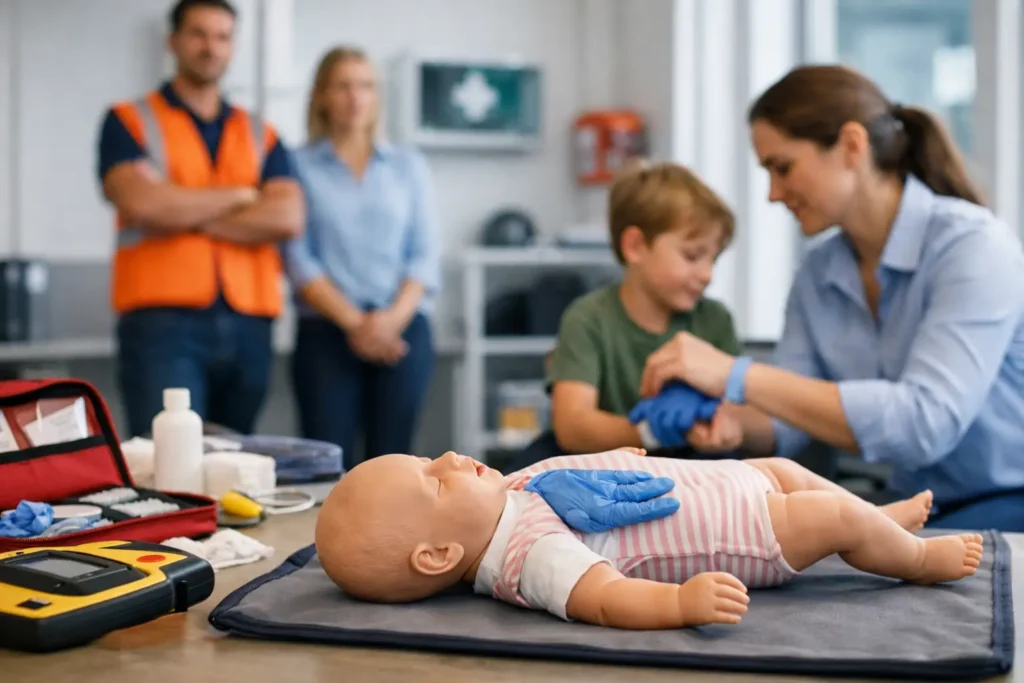
A child choking during lunch, a student suffering an asthma emergency at practice, or a toddler falling on the playground can change the tone of a facility in seconds. Pediatric first aid certification gives the adults responsible for children a practical framework for recognizing an emergency, taking appropriate action, and communicating clearly until additional help arrives.
For schools, child care programs, churches, camps, youth sports organizations, and community centers, this training is more than a credential to file away. It is part of an operational safety plan that helps staff respond with greater confidence when a child needs care.
Pediatric first aid training is designed around the emergencies that can affect infants and children. While course content varies by provider and program requirements, certification commonly addresses how to assess a scene, use personal protective equipment, control bleeding, manage choking, respond to allergic reactions, recognize breathing problems, care for burns, and respond to seizures, injuries, and sudden illness.
The most useful courses do not treat first aid as a checklist of isolated skills. They help participants practice the decision-making that happens in real situations: when to call 911, when to notify a parent or guardian, how to assign someone to meet EMS, and how to document what occurred after the emergency has passed.
This distinction matters. Staff members may know where the first aid kit is, but an organized response depends on knowing who contacts emergency services, who stays with the child, who retrieves the AED, and who manages the rest of the group. Hands-on training helps turn those responsibilities into a coordinated response rather than a scramble.
First aid is one part of pediatric emergency preparedness. A complete program should also consider pediatric CPR and AED training, because cardiac emergencies require immediate action and every minute matters.
An AED is designed to guide rescuers through the response with audible and visual prompts. In a school, church, recreation center, or athletic facility, staff should know the AED location, how to bring it to the scene quickly, and how to follow the device prompts while CPR is underway. Organizations serving young children should also review whether their AED setup includes the appropriate pediatric electrode pads or an approved pediatric energy-reduction option for their device.
Pediatric AED readiness is not simply about placing a device on a wall. It includes visible signage, accessible placement, staff awareness, current pads and batteries, and a written emergency response process. A device locked away in an office or stocked with expired supplies can create delays when teams need every second.
For many organizations, combining pediatric first aid certification with CPR and AED training is the practical choice. It builds skills across the same staff group and gives leaders a chance to test their emergency procedures in a realistic setting.
There is no single course format that fits every organization. State child care licensing rules, school policies, insurer expectations, youth program requirements, and job responsibilities can all affect what training is needed and how often staff must renew it.
A child care center may need a specific credential accepted by its licensing authority. A school district may require designated staff, nurses, coaches, or transportation personnel to maintain certification. A church nursery may have more flexibility, but it still benefits from training volunteers and employees who are regularly responsible for children.
Before scheduling a class, leaders should identify who needs training, the age groups served, any applicable regulatory requirements, and whether the program needs infant, child, and adult skills. Asking those questions early avoids a common problem: completing a course that does not meet the organization’s actual policy or licensing need.
Certification is most valuable when it connects to equipment, roles, and routine practice. A binder on a shelf is not a response plan unless staff know how to use it under pressure.
Start by identifying likely emergency locations. In a school, that may include classrooms, cafeterias, gyms, playgrounds, and athletic fields. In a church, consider classrooms, sanctuary areas, fellowship halls, and parking lots. For camps and youth programs, include off-site activities, vehicles, and outdoor spaces where access to emergency equipment may take longer.
Then make responsibilities clear. Staff should know who calls 911, who gets the first aid kit or AED, who contacts the parent or guardian, and who directs emergency responders to the correct location. If one person is absent, there should be a backup. This is especially important for programs with volunteers, rotating staff, or large campuses.
Equipment checks should follow the same discipline. First aid supplies need to be replenished after use and reviewed for expired items. AED pads and batteries have expiration dates, and cabinets, alarms, signage, and response instructions should be checked as part of a recurring readiness process. AED program management gives organizations a way to track those details instead of relying on memory or a last-minute inspection.
Online education can be useful for reviewing concepts, but hands-on practice is particularly valuable for skills such as CPR, choking relief, bandaging, and AED use. During an emergency, staff need to be comfortable locating equipment, positioning a child appropriately, communicating with teammates, and following the next step without losing time.
Onsite training can make that practice more relevant. Teams can discuss their own facility layout, identify the nearest AEDs, and walk through what would happen if an emergency occurred during a busy arrival period, a worship service, or an outdoor event. Those conversations often reveal small but meaningful gaps, such as a missing emergency contact list, unclear AED signage, or a first aid kit that is not available where activities actually occur.
Training also creates an opportunity to include people who may be overlooked. Coaches, front-office staff, maintenance personnel, security teams, transportation staff, and regular volunteers may be among the first adults on scene. The right training group depends on the organization, but emergency readiness should not rest on one person alone.
Skills fade when they are not practiced. Certification renewal schedules matter, but so do brief refreshers between courses. A five-minute staff meeting review of AED locations, a seasonal check before sports begin, or a tabletop discussion after a facility change can keep response roles familiar.
Leaders should also update their plan when circumstances change. New construction, relocated classrooms, an expanded playground, new staff, or a replacement AED can all affect how quickly help reaches a child. Reviewing the plan after an incident or drill is equally useful. The goal is not to assign blame. It is to learn where response time, communication, or equipment access can improve.
Square One Medical helps organizations bring training and emergency equipment planning together, making it easier to prepare teams for the realities of their facility. The strongest programs pair credible instruction with equipment that is visible, maintained, and ready for use.
When children are in your care, preparedness is a daily responsibility, not an item to revisit only when a renewal date appears. Schedule the right training, confirm your AED and first aid equipment are ready, and give your team a clear plan they can carry into the moments that matter most.