
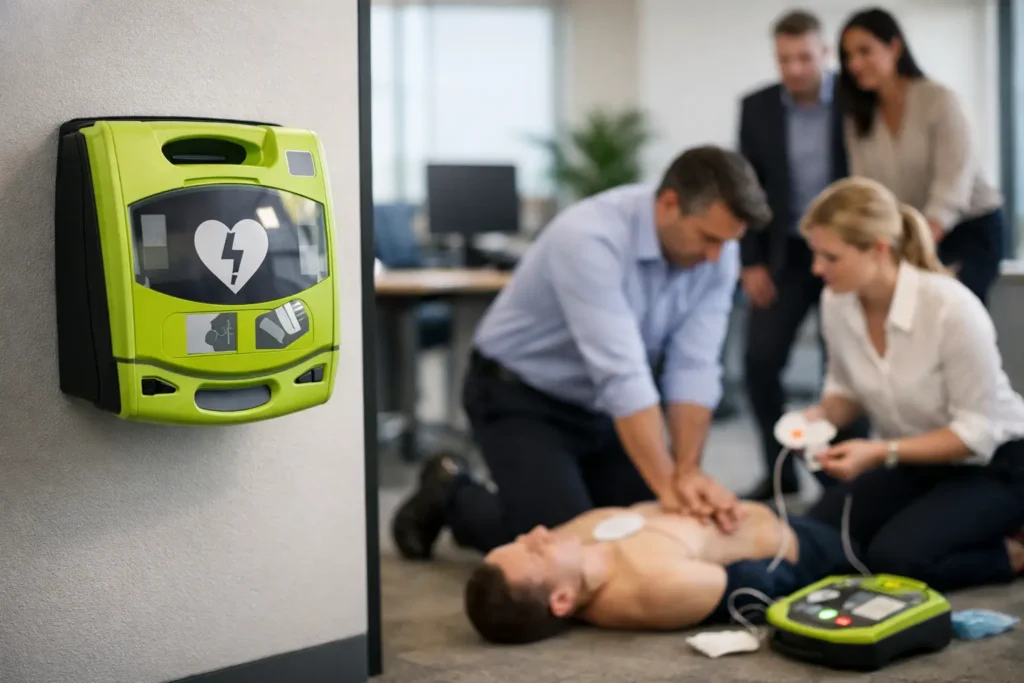
A workplace AED can only help when people can find it, trust that it is ready, and act without confusion. The best workplace AED program features turn a device on the wall into a dependable part of your emergency response plan. For office managers, safety coordinators, HR teams, and facility leaders, that means looking beyond initial equipment placement and building a program that supports readiness year after year.
An AED should be placed where it can be reached quickly during a cardiac emergency. In larger offices, schools, manufacturing facilities, churches, or multi-level buildings, one centrally located device may not be enough. Consider building size, daily traffic patterns, stairways, locked-access areas, and locations where strenuous activity occurs.
A practical goal is to make the AED accessible within a short response time from high-occupancy areas. Clearly marked cabinets, visible signage, and locations known to employees or staff are just as important as the device itself. An AED placed in a manager’s office or secured behind an inaccessible door may be protected, but it is not truly available in an emergency.
AEDs require attention after installation. Pads and batteries have expiration dates, cabinets may need inspection, and changes in staffing or facility layout can affect your response plan. Strong AED program management creates a reliable process for checking equipment, documenting inspections, and replacing time-sensitive supplies before they become a problem.
Assigning a responsible AED coordinator is a good start, but the coordinator should not have to manage every detail from memory. Expiration tracking, inspection reminders, equipment updates, and accessible records make it easier to maintain accountability. This is especially valuable for organizations with multiple devices or locations.
A well-equipped workplace still needs people who feel prepared to respond. CPR and AED training helps employees recognize cardiac arrest, call 911, begin CPR, retrieve the AED, and follow the device prompts. Modern AEDs are designed to guide rescuers, but hands-on practice builds confidence when seconds matter.
Training should reflect the people and environment you serve. A school may train nurses, front office teams, coaches, and administrators. A manufacturing facility may include shift supervisors, first aid team members, and security personnel. Churches and community organizations often benefit from training ushers, childcare volunteers, staff, and event leaders.
The best programs also plan for turnover. New hires, changing volunteer teams, and expiring certifications can quietly weaken preparedness unless there is a schedule for refresher training and recertification.
An AED program works best when it is connected to a written emergency response procedure. Staff should know who calls 911, who retrieves the AED, who meets emergency medical services, and where responders should direct them. The plan should be simple enough to use under pressure.
Include AED locations in employee orientation, safety meetings, and evacuation or emergency communication materials. If your facility has security, reception, or front-desk staff, they should understand how to direct visitors and emergency responders to the right location. Periodic drills can reveal gaps that are easy to fix before a real emergency occurs.
Accessibility involves more than a wall cabinet. Your AED should be easy to spot, clearly identified, and available whenever the facility is open. Consider whether the cabinet location remains accessible during evenings, weekend events, athletic programs, or different work shifts.
Organizations may also need related response supplies, such as personal protective equipment, trauma kits, or overdose response resources, depending on their risk profile and setting. Keeping emergency equipment organized in designated, well-marked locations reduces hesitation and lost time.
Requirements for AED programs can vary by state, facility type, and organization. A thoughtful program keeps documentation organized, including device information, inspections, training records, maintenance activity, and emergency response procedures. These records support internal accountability and help leaders demonstrate that readiness is being actively managed.
Compliance should not be treated as a one-time checklist. Equipment changes, building expansions, and staff turnover can all create new considerations. Reviewing your program annually is a practical way to confirm that placement, supplies, training, and policies still match your organization.
Managing AED readiness through several vendors can create unnecessary gaps. A full-service partner that supports AED placement, hands-on CPR/AED training, program management, replacement pads and batteries, and equipment updates can simplify the process for busy organizations.
Square One Medical helps organizations build practical emergency preparedness programs that match their facilities, teams, and daily operations. The right support allows safety leaders to spend less time tracking details and more time knowing their people are prepared.
The most valuable AED program is not the one with the most paperwork or equipment. It is the one your team can rely on when a person suddenly needs help: visible, maintained, understood, and ready to be used.