
A medical emergency at school rarely happens when the nurse, principal, and athletic trainer are all in the same room. It may happen in a hallway during a class change, on a playground, at an evening concert, or during a game. Knowing how to train school staff means preparing the people who are already nearby to recognize an emergency, act quickly, and work as a coordinated team until EMS arrives.
Training should not feel like a once-a-year compliance task. For administrators, it is part of building a school environment where staff members know their role, emergency equipment is ready, and students, visitors, and employees have a better chance of receiving timely care.
Start by identifying the situations your staff are most likely to face. Cardiac arrest, choking, severe bleeding, allergic reactions, opioid overdoses, seizures, diabetic emergencies, heat illness, and injuries are all possible, but each campus has different risks. An elementary school, a large high school with athletics, and a rural district with longer EMS response times may need different emphasis.
A practical training plan begins with a small response team but does not stop there. School nurses, administrators, coaches, security personnel, front-office employees, facilities staff, and teachers should all understand the basic emergency response process. The goal is not to turn every employee into a medical professional. It is to ensure that enough people can recognize a life-threatening event, call 911, begin care, retrieve an AED or trauma kit, and direct responders to the correct location.
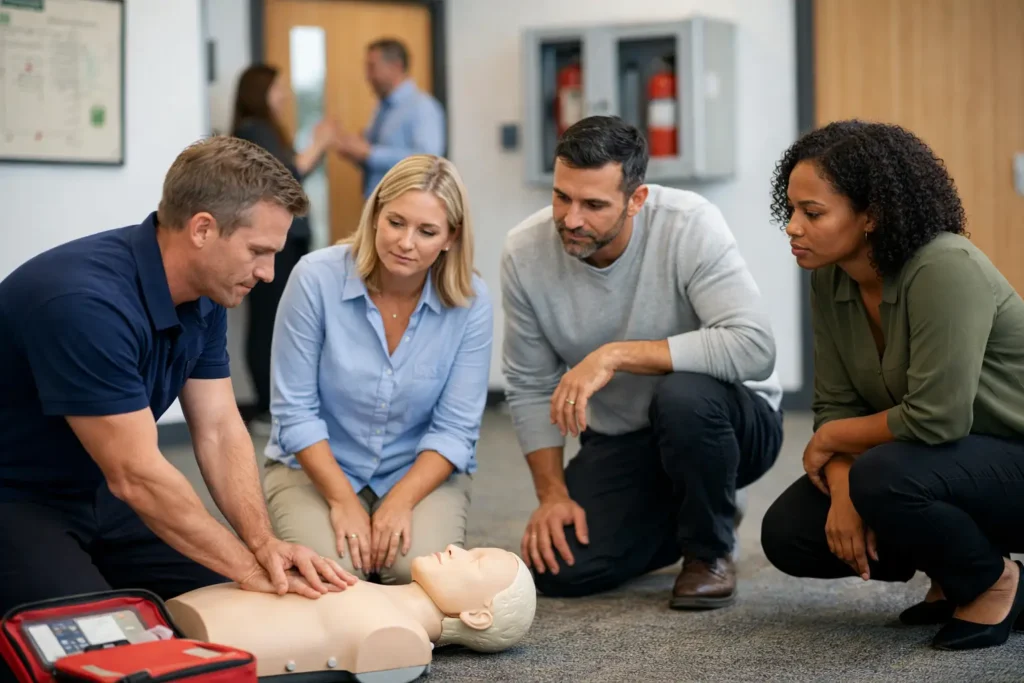
For most schools, CPR, AED, and first aid training are the foundation. Hands-on practice matters because staff need to physically use a manikin, apply AED pads, and follow prompts under realistic conditions. A short online module can support learning, but it cannot fully replace the confidence gained by practicing the steps with an instructor.
During an emergency, vague instructions create delays. Establish clear roles before anyone needs them. One person calls 911 and notifies the front office. Another begins CPR or first aid. Another retrieves the AED, bleeding-control kit, or emergency medication. A staff member meets EMS and guides them through the building.
These assignments should be flexible. The assigned responder may be absent, supervising another area, or caring for students. Train multiple people for every critical task, especially across shifts, buildings, athletic facilities, and after-school programs. Coaches and activity leaders deserve particular attention because sports practices and events often occur when central office staff are not present.
An AED program is more than placing a device on a wall. Staff must know where each AED is located, how to access it, and what to do when the device arrives. They should understand that AEDs provide clear voice prompts and are designed to guide trained responders through the process. The most important point is speed: early CPR and defibrillation can make a meaningful difference during sudden cardiac arrest.
Walk the campus with your emergency response team. Check whether an AED can be reached quickly from classrooms, cafeterias, gymnasiums, auditoriums, outdoor fields, and common gathering areas. A device located in a locked office or far from an athletic complex may not serve the people who need it most. Placement should account for building layout, hours of operation, public events, and the distance staff must travel and return.
Equipment readiness requires ownership. Assign someone to inspect AED status indicators, check cabinets and signage, and monitor the expiration dates of pads, batteries, and first aid supplies. Document those checks. A program can fail quietly when consumables expire or an AED is moved during a renovation and never returned to its intended location.
A full-service preparedness partner such as Square One Medical can help schools align hands-on training, AED placement, equipment selection, and ongoing program management so safety responsibilities do not fall on one overwhelmed staff member.
Certification courses teach essential skills, but school-based drills show whether the response plan works in the actual environment. Run brief, announced scenarios at different times of day. For example, simulate a collapsed adult in the gym, a choking student in the cafeteria, or a severe bleeding incident near the bus loop.
Observe the time it takes to recognize the event, call 911, retrieve equipment, begin care, and bring EMS to the correct location. The purpose is not to judge staff or create anxiety. It is to identify practical barriers, such as unclear AED signage, a locked gate, poor radio coverage, or uncertainty about who supervises students while responders assist the patient.
After each drill, ask a few direct questions: Did everyone know whom to call? Was the AED easy to find? Did the front office have the right information for 911? Could staff describe the exact location to arriving responders? Small adjustments after a drill can prevent major delays during a real emergency.
School employees already manage demanding schedules. The most effective approach respects their time while protecting the hands-on components that create confidence. Consider training larger groups in scheduled sessions, then provide shorter refreshers during staff development days, coach meetings, and seasonal orientation periods.
New employees should receive an introduction to the school’s emergency equipment and response plan during onboarding, even if their formal certification occurs later. Temporary staff, substitutes, volunteers, and event personnel may not need the same level of training as designated responders, but they should know how to activate the emergency system and where to find help.
Keep instructions consistent. Use the same language for calling the office, requesting an AED, directing EMS, and documenting an incident. If one building calls for a “medical response” and another uses an unfamiliar code, staff who work across campuses may hesitate. Plain language is often the clearest choice during a high-stress event.
Emergency readiness changes as staff, facilities, and student needs change. Review your plan after a major event, staff turnover, construction project, or athletic season. Update AED maps when devices move. Replace expired supplies on schedule. Make sure emergency contacts, access instructions, and responder rosters remain current.
It also helps to recognize what training cannot solve by itself. A well-trained team still needs accessible equipment, administrative support, reliable communication, and a plan for calling EMS. Conversely, an AED cabinet or trauma kit is only valuable when staff know where it is and feel prepared to use it.
The best school safety programs make emergency response familiar before it becomes urgent. When staff have practiced their roles, know where lifesaving equipment is located, and trust the plan around them, they can focus on the person who needs help most.