
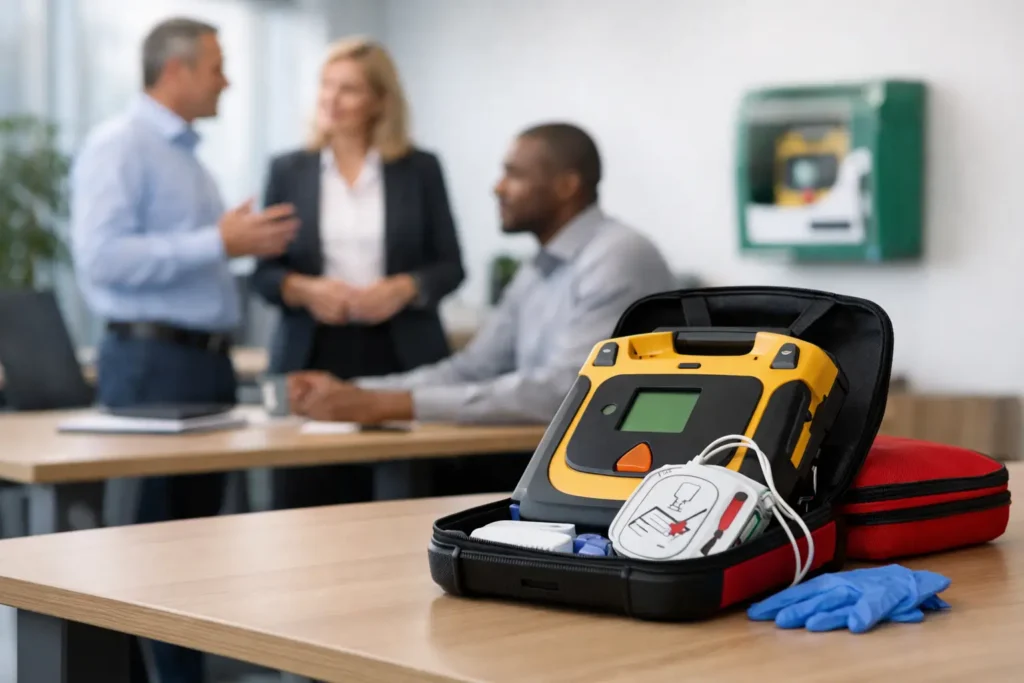
A cardiac arrest emergency does not give your team time to compare specs, call vendors, or figure out where the nearest device should have been placed. If you are responsible for safety at a workplace, school, church, or public facility, knowing how to buy an AED starts with a more practical question: what will help your people respond fast, confidently, and with as little friction as possible?
For most organizations, the right AED decision is not just about the unit itself. It is about coverage, ease of use, ongoing readiness, and whether your staff will actually be trained and supported after the purchase. That is where many buyers get stuck. A lower upfront price can look appealing, but if pads expire without notice or batteries are overlooked, the real cost shows up later.
The best approach is to buy for the full response program, not just for a box on the wall. An AED should fit your environment, the people who may use it, and the policies your organization needs to maintain compliance and readiness.
Start with the setting. An office with one floor and a stable staff may need a different placement strategy than a school campus, manufacturing site, church with multiple buildings, or police department with mobile response needs. The key question is simple: can someone retrieve the AED and get back to the victim quickly enough during a cardiac arrest event? If the answer is uncertain, you may need more than one unit.
Ease of use matters just as much as placement. Most AEDs are designed for rescuers with limited experience, but the user interface still varies. Clear voice prompts, simple pad placement guidance, pediatric capability when appropriate, and dependable self-testing features all make a difference in real emergencies. For organizations, reliability and support usually matter more than shopping for the broadest feature list.
An AED purchase should be evaluated as part of an operational plan. That means looking beyond the cabinet and asking what your team will need six months and three years from now.
A school may need pediatric pad options and devices placed near gyms, auditoriums, and athletic fields. A church may need coverage for weekday staff, weekend services, and large community events. A manufacturing facility may need units that can handle dust, noise, or larger campuses. Law enforcement and mobile response teams may need durable AEDs that travel well and can be deployed quickly.
This is where a consultative buying process helps. The right recommendation depends on your building layout, occupancy, traffic patterns, and the age range of the people you serve.
Organizations should account for replacement pads, batteries, cabinets, signage, inspections, and training. Some devices are less expensive upfront but create more administrative work over time. Others support a stronger maintenance process and reduce the chance that something important gets missed.
If you are replacing older units, trade-in options may also change the math. That can make it easier to standardize devices across sites or upgrade to a model that is easier for staff to use.
Every AED program needs a plan for readiness. Pads and batteries expire. Devices need routine status checks. Incident response documentation may be required. If no one owns those tasks internally, even a good AED can become a weak point.
That is why many organizations benefit from AED program management support, including expiration tracking, replacement reminders, and equipment updates. Buying the device is only the first step. Keeping it rescue-ready is what protects people.
If your team is nervous about using an AED, that should influence what you buy. The best device for your organization is one your staff can use confidently under pressure.
Hands-on CPR and AED training gives decision-makers a clearer sense of what matters in the field. It also helps identify who will respond, where devices should be placed, and how many staff members should be trained per shift or building. In many organizations, training and equipment decisions work best when they happen together.
A one-vendor approach can make this much easier. When the same partner helps with certification, AED placement, equipment selection, and ongoing support, the program is typically more consistent and easier to manage.
One of the biggest mistakes is buying too few units for the size of the facility. Another is placing an AED where it looks tidy rather than where it can be reached quickly. Some organizations also buy a device without assigning responsibility for inspections, replacement consumables, or refresher training.
There is also a tendency to overfocus on product comparison and underfocus on response planning. For most workplaces, schools, and community organizations, the difference between a good outcome and a preventable delay is not a minor feature difference. It is whether the AED was accessible, maintained, and supported by trained responders.
The strongest AED purchase is one that fits into a larger safety system. That includes placement guidance, staff training, replacement supplies, and a clear process for keeping each unit current. Organizations that take this route usually spend less time chasing expirations and more time knowing their emergency response plan is workable.
For buyers managing multiple sites or regulated environments, support matters even more. Schools, churches, offices, manufacturers, and public agencies often need help standardizing equipment and keeping records organized across locations. Choosing an AED partner instead of just a product supplier can remove a lot of friction.
Square One Medical works with organizations that want that kind of practical support, especially when training, equipment, and ongoing AED management need to work together instead of being handled separately.
If you are deciding how to buy an AED, think beyond the moment of purchase. Choose a setup your team can maintain, trust, and use without hesitation when every second counts.