
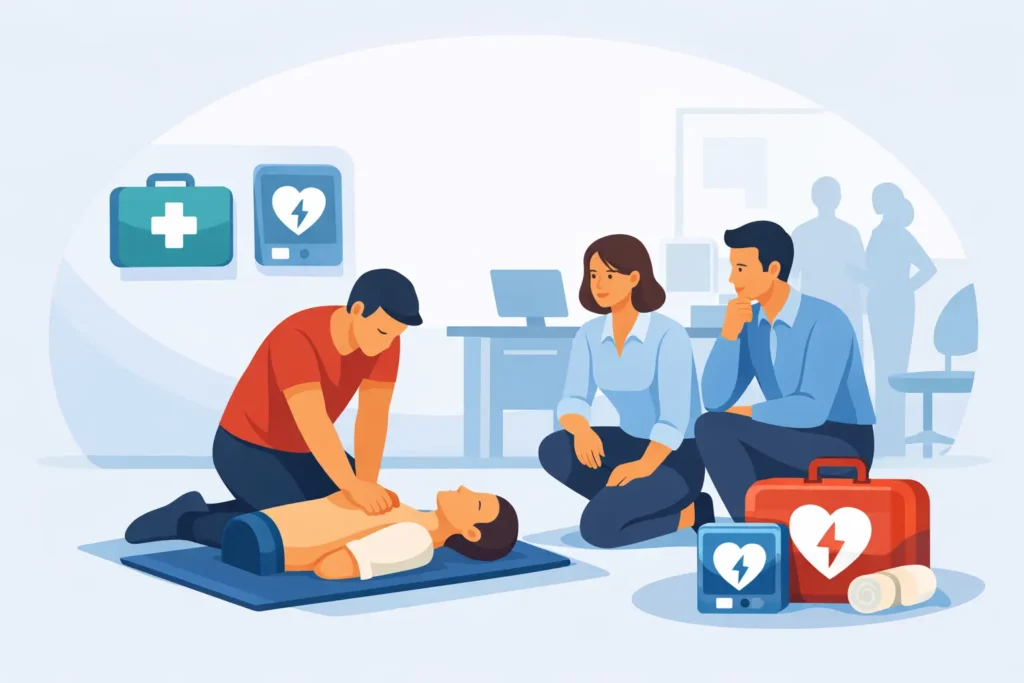
A medical emergency at work rarely arrives with warning. One minute it is a normal day in the office, school, church, or shop floor. The next, someone is down, bystanders are frozen, and every second matters. That is why cpr certification is not just a box to check. For organizations responsible for employees, students, visitors, or congregants, it is part of a practical response plan that can save a life before EMS arrives.
Many organizations first look into training because of a policy requirement, an insurance question, or a general safety initiative. Those are valid reasons, but they are not the whole story. CPR training gives people a clear first action in a high-stress moment. It reduces hesitation, helps teams recognize cardiac arrest, and teaches responders how to work with an AED instead of waiting and hoping for professional help to arrive in time.
That connection between CPR and AED use is where real readiness starts to take shape. CPR keeps blood moving. An AED analyzes heart rhythm and can deliver a shock if one is needed. In a sudden cardiac arrest event, those two tools work together. Training staff without placing AEDs in the building leaves a major gap. Buying AEDs without training people to use them creates another one.
For schools, churches, manufacturers, offices, and law enforcement agencies, the strongest approach is a coordinated one – trained people, accessible equipment, and a plan that can hold up in a real emergency.
A good CPR course does more than explain chest compressions. It teaches people how to assess the scene, identify an unresponsive person, activate emergency response, provide CPR, and use an AED with confidence. Depending on the course, training may also include choking response and basic first aid skills.
For employers and facility leaders, the bigger benefit is consistency. When multiple staff members are trained the same way, your emergency response becomes more organized. People know who calls 911, who starts compressions, who retrieves the AED, and how to support until first responders arrive. That structure matters, especially in larger buildings or public-facing facilities where confusion can cost precious time.
Not every organization needs the exact same training format. A front office team may need a straightforward certification class. A school district may need broader coverage across campuses. A church may want ushers, childcare staff, and ministry leaders trained together. A manufacturing site may need onsite instruction that fits around shifts and includes a review of AED placement based on facility layout.
One of the most common mistakes organizations make is treating training and equipment as separate decisions. In practice, they belong in the same conversation.
If you are certifying staff, it makes sense to review whether your AEDs are easy to reach, visible, and ready for use. If you are buying an AED for the first time, that is the right moment to schedule training and think through who should be certified. The goal is not simply owning equipment. The goal is creating a response program that works under pressure.
AED placement depends on your building, traffic patterns, and risk profile. A school may need units near the gym, front office, and athletic fields. A church may need coverage for the sanctuary, classrooms, and fellowship hall. A workplace may need units positioned so responders can retrieve one and return quickly from production areas, offices, or warehouses. Police and public safety agencies may have another layer of need, especially when mobile access matters.
This is also where AED program management becomes valuable. Pads and batteries expire. Cabinets and signage need to stay visible and intact. Device status checks need to happen consistently. Without a process, even a well-intentioned safety purchase can become unreliable over time.
For most decision-makers, the best training option comes down to three factors: credibility, convenience, and fit. You want a course that meets your organizational requirements, works for your staff schedule, and prepares people for realistic response.
Onsite training often makes the most sense for employers and institutions because it reduces disruption and allows teams to train together in the environment where they may actually respond. It can also make it easier to include AED awareness, building-specific response roles, and discussion around equipment locations.
Offsite classes can be a good fit for smaller groups or organizations with only a few employees who need certification. The trade-off is that the instruction may be less tailored to your facility and internal response plan.
It also helps to think beyond the initial class. Certification renewal cycles, new hires, role changes, and turnover all affect preparedness. If training is not easy to repeat, readiness tends to slip. That is why many organizations prefer working with a single partner that can handle recurring certifications, AED sales, replacement supplies, and ongoing management support.
Not all providers offer the same level of support. Some can teach the class and leave you to figure out everything else. Others help build a more complete safety program.
A stronger partner can help you evaluate how many AEDs you need, where they should be placed, how to maintain them, and when consumables need replacement. That matters because preparedness is operational, not theoretical. It has to survive staff turnover, busy schedules, changing facilities, and budget cycles.
For schools and churches in particular, ease matters. Leaders are often balancing safety goals with limited administrative time. For HR teams and operations managers, consistency matters. They need certifications tracked, staff trained on schedule, and equipment readiness supported without chasing multiple vendors. For law enforcement and industrial settings, durability and response speed may carry more weight. The right recommendation depends on the environment.
Square One Medical serves organizations that want training and equipment handled in one place, which often makes implementation far simpler than piecing together separate providers.
Training is essential, but it is only one part of emergency readiness. A stronger plan includes accessible AEDs, clearly assigned response roles, visible signage, maintenance checks, and a process for replacing expired pads or batteries before they become a problem.
This is where many organizations move from reactive safety to practical preparedness. Instead of asking, “Do we have someone certified?” the better question becomes, “If an emergency happens here tomorrow, are we truly ready to respond?”
Sometimes the answer is yes. Sometimes it is yes, but the AED placement needs work. Sometimes training is current, but the equipment program is not. Sometimes an organization has bought a unit years ago and no one is sure whether it is still response-ready. Those are fixable problems, but only if they are identified before an emergency.
CPR certification gives your team the confidence to act. Paired with the right AED strategy and ongoing program management, it gives your organization something even more valuable – a response plan people can trust when seconds matter most.
The best time to sort out training, AED placement, and equipment readiness is before anyone needs them.