
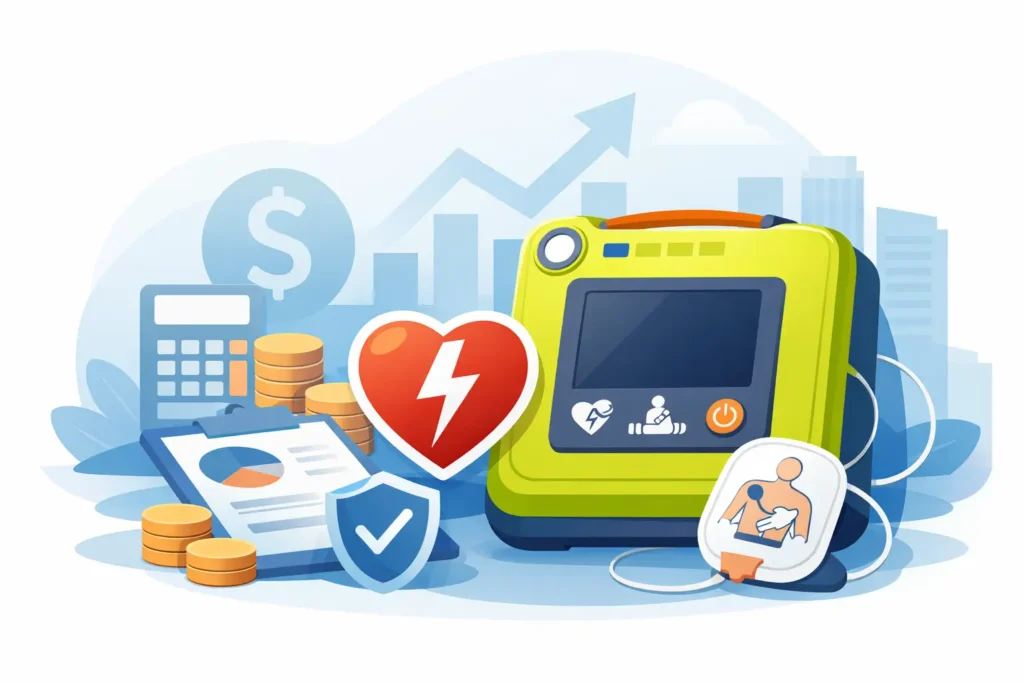
If you are comparing AED options for a school, office, church, or public facility, the ZOLL AED 3 price is usually one of the first questions that comes up. That makes sense. Budget matters, but so does buying a device your team can actually use under pressure, maintain without hassle, and trust in a real emergency.
The tricky part is that AED pricing is rarely just one number. A quote can change based on the model configuration, whether you need pediatric capability, what accessories are included, and how much support comes with the purchase. Looking at price alone can make one unit seem cheaper upfront while costing more over time.
The ZOLL AED 3 is a premium public access AED, so it typically sits above entry-level devices in the market. That higher price point is tied to features that matter in real-world response, especially for organizations placing AEDs where lay responders may be the first to act.
One major factor is the device configuration. Some packages include a semi-automatic model, while others may include different setup options or language requirements. Cabinets, wall signs, rescue kits, and readiness accessories also affect the final number. If you are outfitting multiple sites, pricing may look different than a single-unit purchase.
Electrode and battery design also play a role in value. The ZOLL AED 3 uses a unified adult and pediatric electrode system in many configurations, which can simplify purchasing and reduce confusion during an emergency. For some buyers, that convenience is worth paying for. For others, especially very small facilities with tighter budgets, a lower-cost device may still be enough.
Another cost driver is support after the sale. Some vendors simply ship a box. Others help with AED placement, registration, reminder tracking, replacement pads and batteries, and ongoing program oversight. For a workplace or school that does not want staff chasing expiration dates manually, that service can justify a higher purchase price.
In most cases, the ZOLL AED 3 price for a new unit falls somewhere in the upper range of public access AEDs, often around the low-to-mid $2,000s before add-ons. Complete packages with a cabinet, signage, rescue supplies, or upgraded program support can push the total higher.
That range is not unusual for an AED designed with CPR feedback, a full-color display, and strong usability features. If you are comparing quotes, make sure you are comparing the same package level. One vendor may show a lower number but leave out essentials you will need to buy immediately after.
It is also worth asking whether the quote includes freight, setup help, warranty details, and future support. Those items are not always listed in the headline price, but they matter when you are planning a program across one site or many.
A lower-cost AED can still save a life. That is true. But many organizations choose the ZOLL AED 3 because it is built to make response easier for non-medical users.
Its real-time CPR feedback is one of the biggest reasons. In a high-stress situation, responders may forget compression depth, speed, or hand placement. The device guides them with visual and audio prompts, which can improve confidence and performance. For schools, churches, gyms, and offices where the likely responder is not a clinician, that matters.
The display is another practical advantage. Clear visuals can help when the room is loud, the responder is nervous, or multiple people are trying to help at once. Some AEDs rely heavily on voice prompts only. That may be fine in certain settings, but a strong visual interface can be a better fit for busy public environments.
The longer-term maintenance profile is also part of the value conversation. Consumable life, replacement schedules, and ease of checking readiness affect the true cost of ownership. A device that is easier to manage is less likely to be neglected, and neglected AEDs create risk no organization wants.
This is where many buyers make the best decision. Instead of asking only, “What does it cost today?” ask, “What will it cost to own and maintain over the next five to eight years?”
That means looking at replacement pads, battery life, software or program management needs, and staff time spent on inspections. If one AED costs less upfront but requires more frequent consumable replacement or more hands-on oversight, the savings may disappear.
It also means considering the cost of confusion. If your staff is more likely to hesitate with a basic model, or if pediatric response requires a separate accessory that may not be nearby when needed, the lower sticker price may not be the better operational choice.
For larger organizations, standardizing equipment across locations can also save time. Training is simpler when staff see the same device format throughout the organization. Readiness checks become more consistent. Ordering replacements becomes easier. Those operational gains are hard to show in a simple price comparison, but they are real.
When reviewing the ZOLL AED 3 price from different suppliers, ask for a complete breakdown. You want to know exactly what is included on day one and what support continues after purchase.
Look closely at whether the quote includes the AED, pads, battery, wall cabinet or bracket, signage, prep kit, warranty support, and any management reminders or tracking assistance. If your organization needs help with AED placement strategy, staff training, or compliance support, that should be part of the conversation too.
A good supplier should also ask questions about your environment. A school, manufacturing floor, church campus, and police vehicle do not all need the same setup. The right recommendation depends on population, response time, building layout, and who is most likely to use the device.
That consultative piece is often what separates a simple equipment transaction from a real preparedness plan. Square One Medical works with organizations that want both the right AED and a practical path to keeping it ready.
For many organizations, yes. If you want an AED with strong guidance features, a user-friendly interface, and long-term program value, the ZOLL AED 3 often earns its place. It is especially well suited for workplaces, schools, churches, athletic settings, and community spaces where responders may have training but limited hands-on experience.
That said, it depends on your setting and budget. A small office with a very limited budget may need to prioritize basic coverage first. A larger campus or public-facing facility may benefit more from the added usability and support features. The best choice is not always the cheapest unit. It is the one your team can deploy confidently and maintain consistently.
If you are evaluating AED options, treat price as one part of the decision, not the whole decision. The right device should fit your environment, your responders, and your readiness plan so that when seconds matter, your equipment is ready and your people are not guessing.