
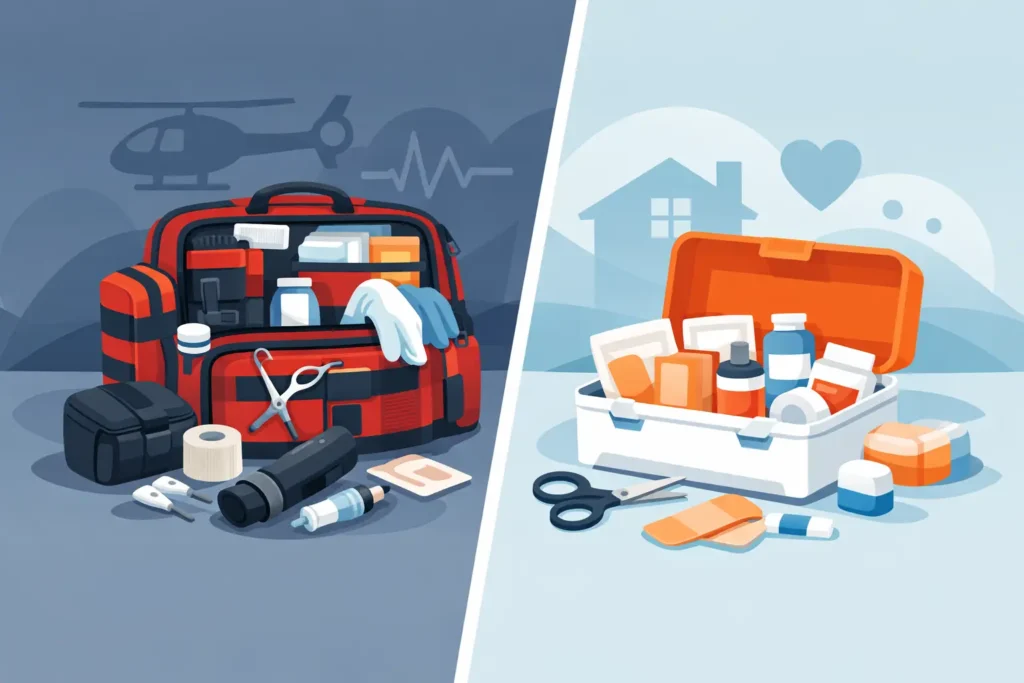
A cut finger in the break room and a life-threatening bleed in a parking lot are not the same emergency, and your supplies should not be either. That is the core issue in the trauma kit vs first aid kit discussion. Many organizations assume one cabinet can cover everything, but minor injuries and critical injuries require different tools, different training, and a different level of urgency.
For workplace leaders, school administrators, church staff, and facility managers, this is less about labels and more about response capability. If your team only has a standard first aid kit, they may be prepared for everyday incidents but not for severe bleeding, penetrating trauma, or injuries where minutes matter. If you only focus on trauma supplies, you may overlook the basics your staff uses far more often. The right answer is usually not one or the other.
A first aid kit is built for common, lower-acuity injuries. Think cuts, scrapes, minor burns, blisters, headaches, or routine wound care. These kits usually include adhesive bandages, gauze pads, antiseptic wipes, gloves, tape, burn cream, and other basic supplies that help stabilize small injuries until the person can return to activity or seek follow-up care.
A trauma kit is built for high-acuity emergencies, especially severe bleeding. It is designed to help a responder take immediate action during a life-threatening event while waiting for EMS. A trauma kit often includes tourniquets, hemostatic dressings, pressure bandages, chest seals, trauma shears, gloves, and clearly organized components for rapid use.
That distinction matters. A first aid kit helps with comfort, cleaning, and basic wound management. A trauma kit helps preserve life during a catastrophic emergency. One supports routine incidents. The other addresses the kind of event no organization wants to face, but should still plan for.
In many day-to-day situations, a standard first aid kit is exactly what you need. If an employee gets a small cut opening a box, a student scrapes a knee on the playground, or a volunteer has a mild burn from a kitchen surface, basic first aid supplies are appropriate. These are the incidents most organizations see regularly, so access to well-stocked first aid products still matters.
The trade-off is that standard first aid kits are not built for serious trauma. They may contain gauze and gloves, but they typically do not include the specialized tools needed to control massive hemorrhage quickly and effectively. In a severe bleeding event, improvising with basic supplies can waste valuable time.
A trauma kit becomes essential when there is a realistic risk of severe injury or delayed access to advanced care. That can apply to manufacturing floors, warehouses, athletic facilities, churches with large gatherings, schools, security teams, law enforcement, and public-facing workplaces. It also matters in facilities where a fall, machinery incident, violent event, or major accident could lead to life-threatening bleeding.
This is where emergency planning often gets more serious. Just as AED placement is based on response time, occupancy, and risk profile, trauma kit placement should reflect where a catastrophic injury could occur and how quickly trained staff can reach the scene. A trauma kit in a locked office does not help much during an emergency in a gym, parking lot, or loading area.
There is also a training issue. Trauma supplies are most effective when staff understand how and when to use them. A tourniquet is a lifesaving tool, but only if responders can recognize severe bleeding and act without hesitation. Equipment alone does not create preparedness.
For most facilities, the practical answer to trauma kit vs first aid kit is both. A first aid kit covers the common incidents that happen every month. A trauma kit covers the low-frequency, high-consequence emergency that can change everything in a matter of minutes.
The exact setup depends on your environment. An office may need several accessible first aid kits and one or two strategically placed trauma kits. A school may need first aid supplies in the nurse’s office, front office, gym, and athletic areas, plus trauma kits near high-traffic or higher-risk locations. A church may want supplies near children’s areas, worship spaces, and security positions. Industrial sites usually need a broader deployment plan based on hazards and building layout.
This is also where AED planning fits naturally into the conversation. Severe bleeding and sudden cardiac arrest are different emergencies, but both demand immediate action before EMS arrives. Organizations that invest in AED placement, routine readiness checks, and staff training are often the same organizations that benefit from a more complete emergency response strategy, including trauma kits and first aid supplies.
Start with a simple risk review. Look at your building size, occupancy, daily activities, injury history, and the time it would take responders or EMS to reach someone in distress. Consider who is on site, including staff, visitors, children, older adults, or large public groups. Then think about where injuries are most likely to happen and where emergency equipment should be mounted for quick access.
After that, match equipment to training. If your team has CPR and AED training but no bleeding control education, a trauma kit is still valuable, but the full benefit comes when staff know how to use it confidently. The strongest programs pair equipment placement with hands-on instruction, routine review, and a plan for replacing expired or used supplies.
Maintenance is easy to underestimate. A neglected kit can create a false sense of readiness. Adhesives fail, gloves degrade, hemostatic products expire, and used items do not always get restocked promptly. The same mindset that supports AED program management should apply here as well: clear ownership, regular checks, and a documented replenishment process.
If you are deciding what to purchase this quarter, do not frame it as an either-or decision unless budget truly forces that choice. If that happens, the answer depends on your current gaps. Facilities with no basic supplies need first aid coverage right away. Facilities with only basic bandages and no severe bleeding capability should strongly consider adding trauma kits next.
For many organizations, the best move is to build a layered response program. Place first aid kits where everyday injuries happen. Place trauma kits where a serious event could unfold. Add AEDs where response time is critical. Train staff so they can recognize the emergency, grab the right equipment, and act decisively.
That is what preparedness looks like in practice – not buying one box and hoping it covers every scenario, but building a response system that fits the people and spaces you are responsible for.
The right kit is the one that matches the emergency in front of you, and the right plan makes sure your team never has to guess.