
Now for a limited time, trade in your old AED for a generous rebate toward a new unit!
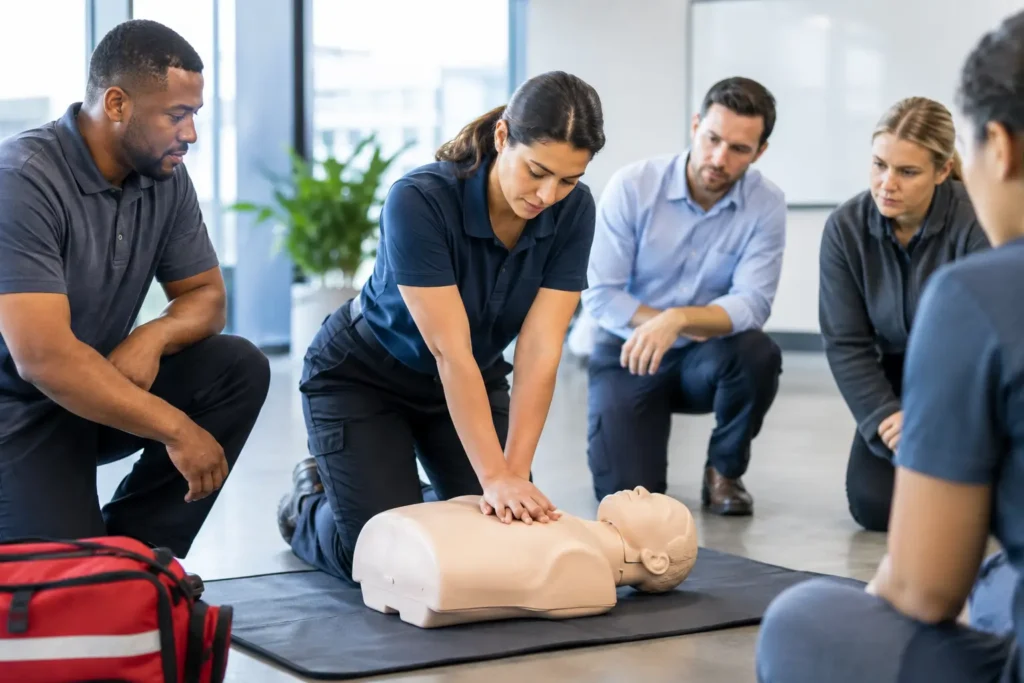
A CPR card on file does not guarantee that a team will respond confidently when a coworker, student, visitor, or congregant collapses. Skills fade, staff changes, schedules get crowded, and AED supplies can reach expiration dates without anyone noticing. Effective CPR refresher planning turns a one-time certification event into a practical readiness process that keeps people prepared for the moments that cannot wait.
For organizations, the goal is more than meeting a training requirement. It is making sure the right people can recognize an emergency, begin CPR, retrieve the AED, and work together until EMS arrives.
CPR is a hands-on skill. Even employees who completed a course two years ago may hesitate over compression depth and rate, forget how to organize a response, or feel uncertain using an AED. Refresher training gives teams a chance to practice in a controlled setting, ask questions, and reconnect the course material to the layout and risks of their own facility.
That context matters. A school may need staff to think through a response during class changes, athletic events, or after-hours programs. A manufacturing operation may need to account for shift coverage, large floor plans, and remote work areas. Churches often need volunteers and staff who can respond across services, childcare rooms, and community events. The basic CPR steps are consistent, but emergency response plans should reflect how people actually move through a building.
Regular training also helps organizations avoid a common gap: assuming that certification status equals operational readiness. Certification is essential, but readiness includes current skills, clear responsibilities, accessible equipment, and a plan people can carry out under stress.
Start with a current roster of employees, volunteers, coaches, or team leaders who need training. Include certification expiration dates, job roles, shift assignments, and whether each person is trained in CPR, first aid, AED use, or all three. This simple record makes it easier to see where coverage may be thin.
Many organizations plan refresher courses 60 to 90 days before certifications expire. That window provides room to schedule multiple sessions, accommodate absences, and avoid the pressure of last-minute renewals. It also prevents an entire team from expiring at once because everyone attended the same original class on the same day.
Staggering certifications can be useful for facilities that need trained coverage at all times. Instead of sending every supervisor or response team member to one session, schedule smaller groups across departments or shifts. The trade-off is additional coordination, but the benefit is that daily operations are less likely to be left without trained personnel.
For teams with frequent turnover, a quarterly review may work better than an annual check-in. New hires, substitute staff, seasonal employees, and volunteers can quickly change who is available to respond. A refresher plan should account for that reality rather than relying on an outdated training list.
A formal CPR certification renewal is appropriate when credentials are approaching expiration or when a role requires current certification. In between renewals, organizations can reinforce readiness through short practice sessions, emergency response drills, and AED orientation for new staff.
Brief skills practice is not a replacement for a certification course, but it can help people retain the confidence to act. A 15-minute AED review during a safety meeting, for example, can remind staff where devices are located, who calls 911, and how to guide responders to the scene. The best format depends on your staff turnover, risk environment, and internal safety requirements.
CPR refresher planning is strongest when it is connected to AED program management. An AED is designed to guide users through a sudden cardiac arrest response, but it must be visible, accessible, maintained, and supported by people who know where it is.
During each refresher cycle, verify that staff can identify the AED locations in their work areas. Review how to retrieve the device without delaying CPR, how to apply pads, and how to keep the area clear during analysis and a shock. Teams should understand that AEDs are made to provide clear voice prompts and should be used as soon as they are available.
The equipment side requires equal attention. Assign a responsible person or team to inspect AED status indicators, cabinet alarms if applicable, adult and pediatric pad expiration dates, battery dates, and response accessories. A device can be in the right cabinet and still leave an organization unprepared if its pads or battery are expired.
This is where centralized oversight helps. Rather than separating training records from equipment checks, maintain one readiness calendar for certifications, refresher sessions, AED inspections, consumable replacements, and drills. Square One Medical helps organizations coordinate training and AED program support so those responsibilities do not fall through the cracks between departments.
A written emergency response plan should answer practical questions before an emergency happens. Who initiates the 911 call? Who retrieves the AED? Who meets first responders at the entrance? Who stays with the individual? Who communicates with family members, administrators, or security?
Avoid assigning every task to a single person. That person may be absent, working in another area, or directly involved in providing care. Designate primary and backup roles, then practice the handoff during drills. The response becomes faster when people know their job without waiting for direction.
Facility layout should also guide AED placement and training priorities. In a large office, warehouse, school campus, church, or recreation center, an AED that is technically on site may still be too far away from a potential emergency. Consider travel time, locked doors, public access, high-traffic areas, athletic spaces, and locations where people are often isolated.
Training sessions are a useful opportunity to ask participants whether they know the nearest AED from their normal work area. If they do not, improve signage, adjust orientation procedures, or reconsider placement. A response plan should work during an ordinary workday, an evening event, and periods with reduced staffing.
Good documentation does more than satisfy an internal policy. It lets safety leaders make informed decisions. Keep course completion records, certification expiration dates, attendee lists, AED inspection logs, maintenance records, drill notes, and follow-up actions in a format that more than one person can access.
After a drill or training session, capture what created confusion. Perhaps the AED cabinet key was not readily available, employees were unsure which entrance to use for EMS, or a department had no trained backup on a certain shift. Those findings are valuable. Correcting them while the event is simulated is far easier than discovering them during a real emergency.
Review the plan whenever your organization changes facilities, adds an AED, opens a new department, changes building access procedures, or experiences significant staffing turnover. Emergency preparedness is not static, and neither should be the plan behind it.
For many organizations, a reliable rhythm includes a monthly visual AED check, a quarterly review of training and staffing coverage, refresher sessions scheduled ahead of certification expiration, and at least one emergency response drill each year. Higher-risk environments or larger campuses may need more frequent drills and more detailed coverage reviews.
The right cadence depends on the organization, but consistency matters more than complexity. A simple plan that is assigned, documented, and reviewed will protect readiness better than a detailed policy no one has time to use.
The next time you schedule a CPR refresher, use the session to test the full response system, not just individual skills. When trained people, maintained AEDs, and clear roles come together, your organization is better positioned to give someone the immediate care that could save a life.