
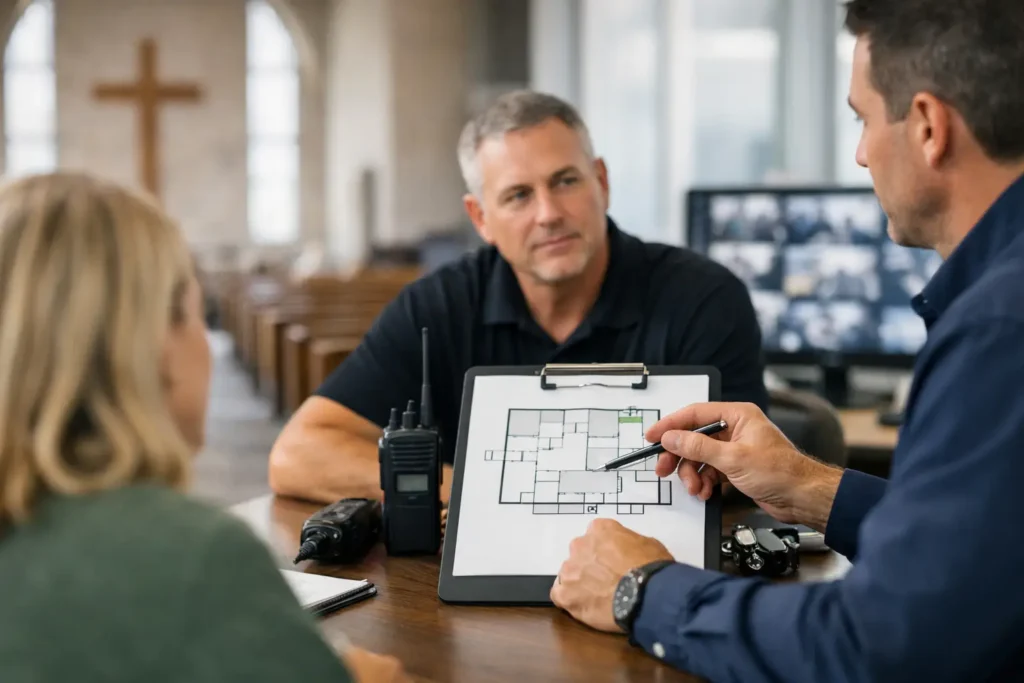
A medical emergency during a worship service rarely gives a church time to figure things out. A congregant collapses in the lobby, a child has a severe allergic reaction, or a volunteer is injured while setting up chairs. In those first few minutes, a thoughtful church safety planning process can give staff and volunteers a clear path from concern to action.
The goal is not to make a church feel restrictive or fearful. It is to protect the welcoming environment people value by preparing the people responsible for it. A practical plan helps leaders respond with calm, supports emergency responders when they arrive, and gives members confidence that their church is ready to care for them.
Every church has a different footprint, congregation, schedule, and volunteer structure. A small congregation meeting in one sanctuary has different needs than a multi-building campus with a nursery, youth programs, weekday events, and a large parking area. The most useful plans begin with an honest assessment of how people use the facility.
Walk the property at the times it is busiest. Consider entrances, classrooms, fellowship halls, kitchens, playgrounds, outdoor gathering areas, and parking lots. Identify where an emergency could happen, who may be nearby, and how responders would get into the building quickly.
Medical emergencies deserve special attention because they are among the most likely incidents a church may face. Cardiac arrest, choking, falls, diabetic emergencies, seizures, allergic reactions, and opioid overdoses can occur without warning. A plan should account for the congregation as it is, including older adults, children, visitors, and people with known health conditions, without singling anyone out or compromising privacy.
A safety plan works only when someone is prepared to take the first step. Churches do not need every volunteer to become a medical expert, but they do need designated people who know their roles and have current training.
Choose response team members from staff, ushers, greeters, children’s ministry leaders, facilities personnel, and dependable volunteers who are regularly present. Make sure there is coverage for each service, not just one highly capable person who may be out of town. For larger churches, a rotating schedule can prevent responsibility from falling on the same few people.
Team members should be trained in CPR, AED use, first aid, and how to communicate effectively during an emergency. Training should also clarify practical responsibilities: who calls 911, who retrieves the AED or trauma kit, who meets EMS at the entrance, who keeps hallways clear, and who communicates with family members or church leadership.
A plan is strongest when these assignments are simple enough to remember under pressure. Rather than relying on a long binder no one has opened recently, use concise procedures and practice them periodically. A brief scenario before a service or volunteer meeting can reveal confusion before a real event does.
Sudden cardiac arrest can affect people of any age, though risk increases with age and certain health conditions. Fast CPR and early defibrillation are critical. That makes AED placement and ongoing AED program management central to church emergency preparedness.
An AED should be located where it can be reached quickly, clearly marked, and available whenever people are in the building. In a larger facility, one device near the sanctuary may not adequately cover a gymnasium, school wing, or remote fellowship hall. Placement decisions should consider walking distance, locked doors, service hours, and the size of the campus.
Visibility matters. A device stored in an office, closet, or cabinet without proper signage may be difficult to locate when seconds matter. Churches should ensure staff and key volunteers know exactly where each AED is located and that visitors can identify it easily.
Equipment readiness is just as important as placement. AED pads and batteries have expiration dates, and devices need routine checks according to the manufacturer’s guidance. A complete AED program includes documented inspections, replacement scheduling, staff awareness, and a clear process for returning a device to service after use. The right partner can help simplify these responsibilities, so the church is not relying on a spreadsheet that gets overlooked during a busy season.
AEDs are one part of a coordinated response. Churches should also evaluate their first aid supplies and consider whether trauma kits, bleeding-control supplies, overdose response resources, or emergency communication tools fit their environment.
The answer depends on the facility and the programs offered. A church with a preschool, active sports ministry, food pantry, or large community events may need more extensive resources than a small congregation using a rented space. Equipment should be placed where incidents are most likely to occur, not simply where storage is convenient.
Assign one person or a small team to inspect supplies regularly. Check expiration dates, replace used items promptly, and verify that equipment has not been moved. For churches that host outside groups, this process becomes even more valuable because equipment may be needed by people unfamiliar with the building.
Clear communication keeps a response organized. During a medical event, someone should call 911 immediately, state the church name and exact address, describe the situation, and remain available for questions. Another team member should meet EMS at a predetermined entrance and guide responders to the patient.
It also helps to decide how internal alerts will work. In some settings, a discreet radio or phone communication system is appropriate. In others, designated runners or a clear verbal signal may be more realistic. The method matters less than ensuring the people on duty understand it and can use it without creating confusion.
After an incident, church leaders may need to communicate with family members, staff, and the congregation. Protect the affected person’s privacy. Share only what is necessary, avoid speculation, and give responders room to do their work.
Children’s ministry requires its own safety considerations. Leaders should know how to contact a child’s parent or guardian quickly, where emergency medical information is stored, and who is authorized to make decisions while awaiting EMS. Classrooms should have a reliable way to call for help, especially if they are separated from the main worship area.
Special events deserve a quick safety review as well. Vacation Bible school, holiday services, festivals, youth nights, funerals, and community meals can change attendance patterns and introduce unfamiliar guests. Confirm that entrances are accessible to EMS, emergency equipment is visible, trained responders are present, and event volunteers know whom to contact.
Church safety planning is not a one-time project. Staff changes, building renovations, new ministries, and equipment expirations can create gaps quickly. Review the plan at least annually and after any emergency, drill, or major facility change.
Ask direct questions: Were trained responders present? Could someone locate the AED immediately? Did everyone know which entrance EMS should use? Were emergency contacts current? These conversations should be constructive, not punitive. The purpose is to make the next response clearer and faster.
Square One Medical helps organizations combine hands-on CPR, AED, and first aid training with AED program support and emergency equipment management. For church leaders, working with one experienced preparedness partner can make it easier to keep training, equipment, inspections, and replacement schedules aligned.
A welcoming church is not one that assumes emergencies will never happen. It is one that has prepared its people to respond with compassion, confidence, and the right resources when a neighbor needs help.