
Now for a limited time, trade in your old AED for a generous rebate toward a new unit!
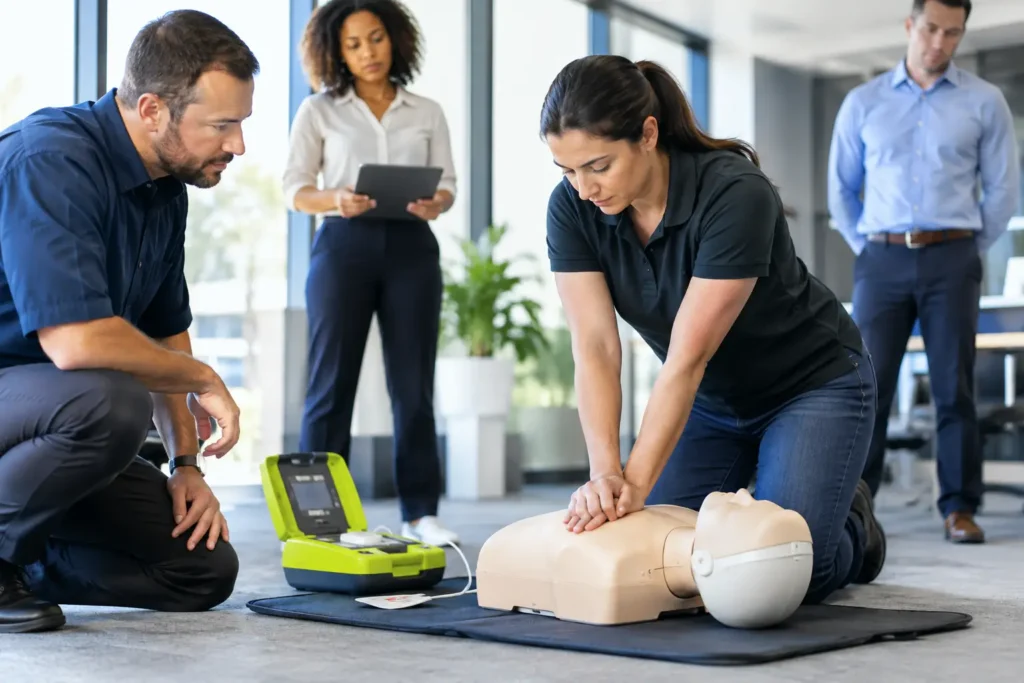
A cardiac emergency does not wait for a safety meeting, a staff member with medical training, or a convenient location. It can happen in a front office, gymnasium, warehouse, sanctuary, or on a playing field. ZOLL AED programs give organizations a practical way to prepare their people, place lifesaving equipment where it can be reached quickly, and keep that equipment ready over time.
For a workplace, school, church, or public-facing facility, an AED should not be treated as a single item checked off a purchase list. Readiness depends on the device, the people around it, its location, and a system for maintaining it after installation.
A well-built AED program connects the steps that must work together during an emergency. The AED is central to the plan, but it is not the whole plan. Organizations need a clear placement strategy, trained responders, accessible signage, documented inspections, and a process for replacing pads and batteries before they expire.
ZOLL AEDs are widely used in public-access defibrillation settings because they are designed to guide rescuers through the response. Depending on the model, features may include clear visual and audio prompts, pediatric capability, and CPR feedback technology that helps rescuers deliver chest compressions at an appropriate rate and depth. Those features can support a trained employee or volunteer when the situation is stressful and time is limited.
The right program also accounts for the organization itself. A manufacturing facility may need devices positioned around large production areas and shift changes. A school may need coverage for athletic fields, cafeterias, and after-hours events. A church may need an AED accessible during services, youth programs, and community gatherings. One placement plan does not fit every building.
An AED stored in an office that is locked after 5 p.m. may be present, but it may not be available when it matters. Placement decisions should start with the question: Can someone retrieve the AED, return to the person in cardiac arrest, and begin using it within a few minutes?
That often means walking the facility rather than relying on a floor plan alone. Consider entrances, high-traffic areas, athletic spaces, remote work zones, elevators, security procedures, and areas where staff or visitors gather. Devices should be visible, clearly marked, and installed in cabinets or wall locations that are easy to identify during an emergency.
Organizations also need to decide who can access the device. In many settings, broad public access is preferable because the closest capable person may be a teacher, employee, coach, usher, visitor, or student staff member. Local regulations, organizational policy, and the specific environment may affect placement and registration requirements, so these details should be reviewed as part of program setup.
An AED is designed to be used by people with little time to spare, but CPR and AED training gives teams the confidence to act instead of waiting for someone else. Training helps participants recognize sudden cardiac arrest, call 911, begin high-quality CPR, retrieve the AED, apply pads correctly, and follow the device prompts.
For organizations, the strongest approach is usually to train more than a small, designated response team. Vacations, shift schedules, turnover, and large facilities create coverage gaps quickly. HR leaders, safety coordinators, teachers, coaches, facilities staff, and front-desk personnel can all play a role in a response plan.
Training also creates an opportunity to practice the handoff between people. One person calls 911, another starts CPR, and another retrieves the AED. That coordination matters. It reduces confusion and helps staff understand that they do not need to handle every task alone.
Square One Medical can support this approach by pairing hands-on CPR/AED training with ZOLL AED program planning, helping organizations align their equipment, placement, and responder readiness through one experienced partner.
The most common AED program issue is not poor intent. It is a lack of follow-through. Pads and batteries have expiration dates. An AED may be moved during a renovation, blocked by furniture, or removed from a cabinet without anyone documenting it. A readiness indicator can change, and a device may go unnoticed if no one is assigned to inspect it.
AED management turns those risks into routine responsibilities. Assign a primary coordinator and a backup. Establish a documented inspection schedule. Confirm that the AED is present, accessible, undamaged, and showing a ready status. Check that the cabinet, signage, trauma supplies, and replacement accessories are where they should be.
A reliable management process should also track expiration dates well in advance. Waiting until a pad or battery expires can create an unnecessary service gap, especially if multiple devices are spread across a campus or several locations. Expiration tracking and equipment updates help safety teams address problems before they become emergencies.
Post-event planning belongs here as well. If an AED is used, the organization should know who will replace pads, inspect the device, restock response supplies, document the event as appropriate, and support employees or community members affected by it. The response does not end when EMS arrives.
ZOLL AED programs work best when they reflect the daily reality of the organization. A single-floor office with stable staffing has different needs than a regional manufacturer operating multiple shifts. A school district may need a consistent approach across buildings, while a police department may need equipment that supports mobile and facility-based response plans.
Start by identifying where people gather, where help may be delayed, and where physical exertion or medical risk may be higher. Review the number of employees, students, visitors, and volunteers who use the property. Then determine how many AEDs are needed, where they should go, who will manage them, and which staff groups should receive training.
There are trade-offs to consider. More devices can shorten retrieval time, but each device adds inspection, replacement, and budget responsibilities. Wall cabinets improve visibility and protection, but access procedures must remain simple. Training a broad group improves coverage, while scheduling may require onsite classes, multiple sessions, or a blended approach. A program partner can help turn those choices into a workable plan rather than a collection of disconnected purchases.
An AED program is a commitment to the people who enter your building. It tells employees, students, families, congregants, and visitors that emergency readiness has been planned before a crisis occurs. More importantly, it gives the people on scene a better chance to act quickly and effectively.
If your organization already has AEDs, this is a good time to verify placement, readiness status, consumable expiration dates, and staff training coverage. If you are building a program for the first time, begin with a facility assessment and a clear owner for ongoing AED management. The best time to organize a response is while everyone has the time to think clearly.