
Now for a limited time, trade in your old AED for a generous rebate toward a new unit!
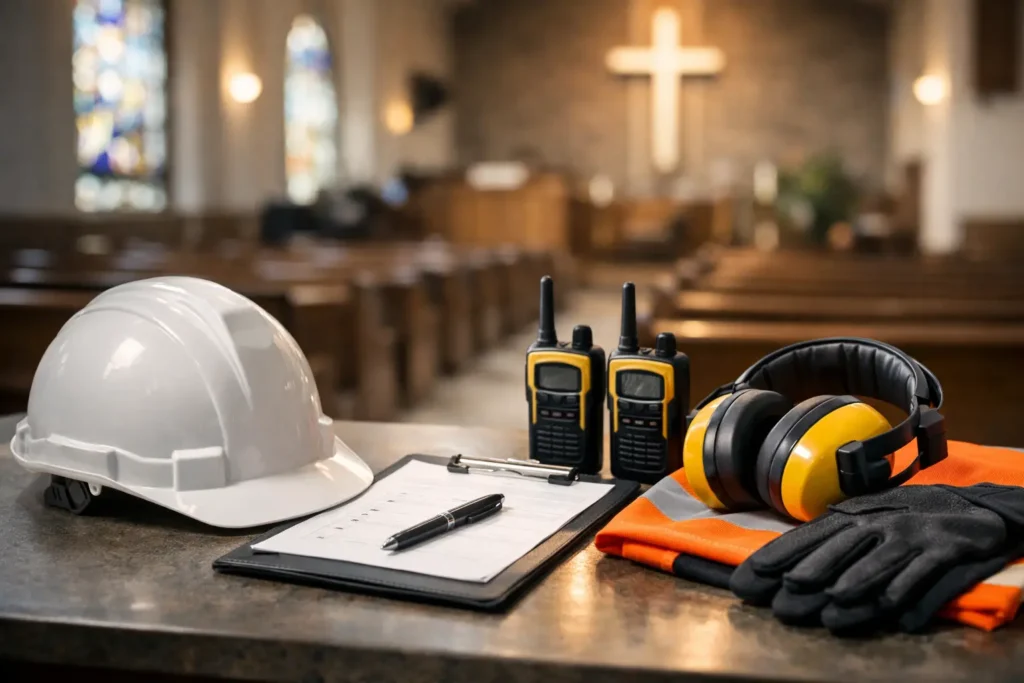
A medical emergency can happen during Sunday worship, a crowded holiday service, youth sports, a weekday preschool program, or an evening community event. A church safety equipment checklist gives leaders a practical way to prepare before a member, visitor, child, or volunteer needs help. The goal is not to turn a church into a hospital. It is to make the first few minutes of an emergency more organized, more confident, and more effective.
Churches often serve people of every age and ability, with attendance and building use changing throughout the week. That makes emergency readiness more than a one-time equipment purchase. It requires accessible equipment, trained people, clear locations, and a process for keeping supplies ready.
A useful safety plan begins with the way your church actually operates. A small congregation in one building has different needs than a multi-building campus with a school, gym, kitchen, nursery, and large parking areas. Consider who is present, where people gather, and how quickly responders could reach each space.
Look at high-traffic and higher-risk areas first. Sanctuaries, fellowship halls, classrooms, nurseries, athletic facilities, kitchens, and large outdoor gathering spaces all deserve attention. Churches that host senior groups, food distribution programs, recovery meetings, or community events may also need equipment that reflects those activities.
Do not let the checklist become a generic box-checking exercise. Equipment should match the building layout, attendance patterns, and the skills of the people who will respond.
Sudden cardiac arrest requires immediate action. An automated external defibrillator, or AED, should be visible, accessible, and available without having to locate a key or wait for a designated staff member. Every minute of delay can reduce the chance of survival, so placement matters as much as the device itself.
Place AEDs where they can be reached quickly from the sanctuary and other busy spaces. Larger campuses may require more than one unit, particularly when there are separate buildings, long hallways, upper levels, athletic areas, or large outdoor programs. Cabinets should be clearly marked, and staff, volunteers, and regular facility users should know where devices are located.
An AED is part of a program, not a stand-alone item. Your church should have a documented inspection process that confirms the unit is ready, the status indicator is normal, pads and batteries are within their expiration dates, and response supplies are present. Keep an AED response kit nearby with items such as gloves, a CPR mask, trauma shears, a razor, and absorbent wipes. After an AED is used, have a plan for replacing pads and returning the unit to service quickly.
First aid kits support the more common situations that can still disrupt a service or program: cuts, falls, minor burns, nosebleeds, allergic reactions, and illnesses. A single small kit in an office is rarely enough for an active church facility.
Keep appropriate first aid supplies in areas where incidents are most likely to occur, such as the nursery, kitchen, gym, office, and event spaces. Kits should be labeled, easy to reach, and periodically inspected. Supplies used during a youth activity or community event should be replaced promptly rather than discovered missing during the next emergency.
For a larger campus, consider assigning responsibility for each kit to a department or area leader. This creates accountability and helps keep supplies from becoming outdated or incomplete.
Severe bleeding is less common than minor first aid needs, but it demands immediate intervention. A properly stocked trauma kit can help trained responders manage life-threatening bleeding while 911 is on the way.
Where appropriate, include trauma supplies such as commercial tourniquets, pressure dressings, gauze, gloves, and trauma shears. These supplies should be placed in accessible locations, especially near gathering areas, gyms, entry points, or spaces used for large events. Training matters here. Equipment is more useful when the people expected to respond understand when and how to use it.
The right quantity and placement depend on the size and layout of the facility. A church with multiple entrances and a large congregation may need supplies in several locations rather than one central cabinet.
Some churches serve the broader community through outreach programs, recovery ministries, food pantries, or public events. In those settings, overdose response equipment may be a reasonable addition to the emergency plan. Naloxone programs should include secure but accessible storage, clear response guidance, and training for appropriate staff or volunteers.
Churches should also establish a policy for personal emergency medications. This is especially relevant for children’s programs, camps, and schools. Policies should clarify who may assist, what documentation is needed, and how parents or guardians are notified. Follow applicable state requirements and seek guidance from legal and medical advisors when developing procedures.
The response can break down when no one knows who has called 911, who is meeting EMS, or where the emergency is happening. Radios, charged phones, emergency contact lists, and a simple internal communication plan can prevent confusion.
Make sure exterior addresses are visible from the street and that building entrances are clearly identified. If your campus has several buildings, create simple location names that responders can understand quickly. Designate someone to meet emergency crews, direct them to the correct entrance, and keep pathways clear.
Helpful scene-support items can include high-visibility vests for safety team members, flashlights, emergency blankets, and basic crowd-management supplies. These are not substitutes for medical care, but they help responders work safely and help the congregation remain calm.
A cabinet full of supplies does not create preparedness by itself. Church staff, safety volunteers, ushers, children’s ministry leaders, coaches, and facility personnel should know their roles. At minimum, identify who calls 911, retrieves the AED, begins CPR, meets EMS, communicates with family members, and documents what happened.
CPR and AED training is particularly valuable because cardiac arrest is a time-critical emergency. Training helps responders move past hesitation, recognize the need for action, and use an AED as designed. Refresher training also gives teams a chance to practice communication and review equipment locations.
Avoid limiting emergency knowledge to one or two people. Those individuals may be absent, attending another service, or already involved in the emergency. A wider group of trained responders gives your church better coverage across services and programs.
The most practical church safety equipment checklist includes recurring checks. Monthly AED inspections, scheduled supply reviews, and documented expiration tracking can prevent unpleasant surprises. Assign the responsibility to a specific role, not simply “the safety team,” so the task does not get lost when volunteers change.
Keep a written record of inspections, battery and pad replacement dates, training dates, and any equipment used or removed. This record supports continuity and gives new leaders a clear view of the program. It also makes budgeting easier because replacements can be planned before they become urgent.
For churches with limited administrative capacity, AED program management support can reduce the burden of tracking consumables and maintaining readiness. The best approach is the one your team can consistently carry out, not the most complicated plan on paper.
A prepared church does not need to anticipate every emergency. It needs accessible equipment, trained and willing responders, and a simple plan that works when people are under stress. Start by walking your campus, identifying the gaps, and assigning one next step for the week ahead.