
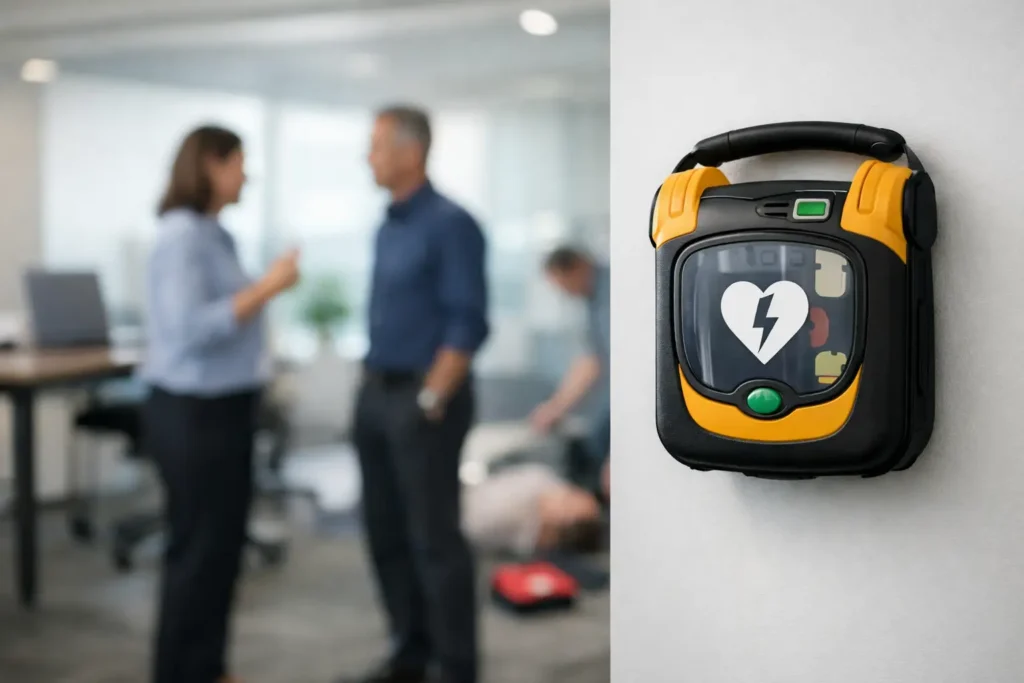
A cardiac emergency at work does not leave much room for debate, delay, or guesswork. If an AED is part of your emergency response plan, people need to know where it is, how to access it, and what to do in the first few minutes. That is why a workplace AED deployment guide should focus less on checking a box and more on building a response that works under pressure.
For most organizations, AED deployment is not just about installing a device on a wall. It is a planning decision that affects response time, staff confidence, compliance efforts, and long-term readiness. The right setup depends on your building layout, population, risk profile, and the level of training your team can realistically maintain.
A useful workplace AED deployment guide starts with one question: how quickly can someone reach a person in cardiac arrest, retrieve the AED, and begin care? That timeline matters more than the total size of your facility on paper. A small site with poor visibility or restricted access can be harder to cover than a larger site with clear traffic flow and trained responders.
Look first at where people spend time and where delays are likely. Front lobbies, production floors, break rooms, gyms, sanctuaries, school corridors, and large meeting spaces often deserve priority. In multi-floor buildings, relying on one centrally placed unit may sound efficient, but the walking time can make that approach weak in practice. If your team would need to cross a warehouse, wait on an elevator, or unlock an office to get the AED, placement needs work.
The goal is simple: make the AED easy to see, easy to access, and close enough to support a fast response. Cabinets, alarms, signage, and wall placement all play a role. Visibility matters because emergencies rarely happen next to the people who planned for them.
Many organizations make the mistake of choosing equipment before mapping the response environment. A site assessment helps you determine coverage needs based on square footage, building design, occupancy, security, and event use. A church that sees large crowds on weekends has different needs than a medical office with controlled daily traffic. A manufacturing site may need to account for noise, heat, dust, or distance between work zones.
This is also where it helps to think through who is on site and when. If your building has visitors, contractors, students, volunteers, or rotating shifts, your AED program should account for people who may not know the layout. If large portions of the facility are open after hours, placement and responder access may need to differ from the daytime plan.
There is no perfect universal number of AEDs per building. Sometimes one well-placed unit is enough. In other settings, multiple units are the safer choice because the environment creates delay. The trade-off is cost versus coverage, but most organizations find that a thoughtful placement plan is more valuable than trying to minimize the number of units at the outset.
Good AED placement is public enough to be found quickly, but protected enough to stay secure and inspection-ready. Hallways near common areas, reception zones, break areas, athletic spaces, and centrally visible walls are often strong options. Locked offices, supply closets, and staff-only rooms usually are not.
Think about line of sight as much as distance. In a stressful moment, people look for obvious cues. Clear signage at decision points such as entrances, stairwells, and corridor intersections can reduce wasted time. In larger facilities, directional signage is just as important as the cabinet itself.
Environmental conditions matter too. Some workplaces need cabinets or mounting choices that account for temperature swings, moisture, or heavy dust. Others may need tamper alarms or more secure placement because of public access. The point is not to complicate deployment. It is to make sure the AED remains available and ready where your people actually work and gather.
An AED on the wall helps most when staff are prepared to act without hesitation. Formal CPR and AED training gives designated responders the confidence to recognize cardiac arrest, call 911, start compressions, and use the device quickly. Even in organizations that train a core response team, awareness training for the broader staff can make a major difference.
This is where many programs either become strong or start to drift. If only one or two people know the plan, coverage can fall apart during vacations, shift changes, or turnover. A better approach is to train enough people across departments, schedules, and locations so the response does not depend on a single person being available.
Training should also reflect the actual environment. If your staff work across multiple floors, in a campus setting, or in high-noise areas, your drills and response plans should match those realities. Practical training tied to the facility layout is more useful than a generic policy sitting in a binder.
Deployment is the beginning of the program, not the finish line. Pads and batteries expire. Cabinets get moved during renovations. Staff turnover leaves gaps in response coverage. If no one owns the ongoing maintenance process, even a well-planned AED program can become unreliable over time.
A strong management process includes routine readiness checks, documentation, replacement scheduling, and visibility into expiration dates. It should also define who is responsible for inspections and what happens after the AED is used. In many organizations, assigning this responsibility to a safety coordinator, facilities leader, HR team member, or school administrator keeps accountability clear.
This is one reason many workplaces prefer a full-service partner rather than managing training, equipment, and compliance support through separate vendors. When AED placement, staff training, replacement supplies, and ongoing program support are coordinated, the program is easier to sustain.
Most deployment problems are not caused by bad intentions. They come from small decisions that seem reasonable until tested. One common issue is placing the AED where it is convenient for staff to mount, not where it is fastest to access. Another is underestimating the effect of locked doors, shift coverage, or building size.
A second mistake is treating training as optional once the AED is installed. While AEDs are designed to guide users, organizations still benefit from trained responders who can move quickly and lead the scene. The third mistake is poor follow-through after deployment. Without inspections and supply tracking, readiness becomes uncertain.
The best AED programs feel like part of normal operations, not an extra burden. Staff know where the devices are. New hires learn the basics. Managers understand who is trained and how to call for help. The equipment is visible, maintained, and supported by a real plan.
For employers, schools, churches, and other community organizations, that kind of readiness reduces confusion when seconds count. It also sends a clear message that safety planning is practical, not performative. Square One Medical works with organizations that want that kind of dependable setup – training, placement support, and ongoing AED program management that fits the way their facilities actually operate.
A good AED deployment plan should leave your team with fewer questions, faster access, and more confidence to respond when it matters most.