
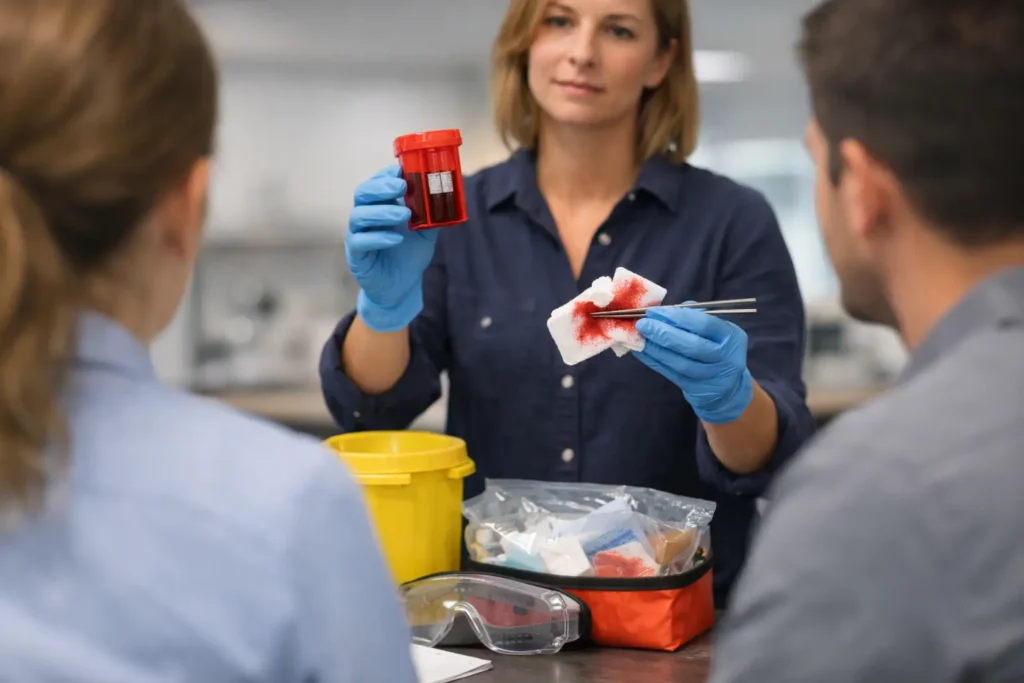
A workplace incident does not have to look dramatic to create serious risk. A bloody nose in a school office, a cut on a manufacturing floor, or first aid after a fall can all expose employees to blood or other potentially infectious materials. That is why bloodborne pathogens training for employees matters well beyond healthcare settings.
For employers, this training is not just about checking a compliance box. It gives staff practical steps for protecting themselves, protecting others, and responding with confidence when an unexpected exposure hazard shows up during the workday. For organizations responsible for overall emergency readiness, it also fits into a larger safety plan that may include first aid, CPR, AED preparedness, personal protective equipment, and clear incident response procedures.
At its core, bloodborne pathogens training teaches employees how certain infectious materials can spread and what to do to reduce that risk. Most programs focus on recognized bloodborne pathogens such as hepatitis B, hepatitis C, and HIV, along with the situations where occupational exposure may occur.
Good training goes beyond definitions. Employees need to understand how exposure can happen through needlesticks, broken skin, eyes, nose, mouth, or contact with contaminated materials. They also need practical guidance on universal precautions, hand hygiene, proper cleanup, disposal methods, and when to report an incident.
For many organizations, the most valuable part of training is the real-world application. Staff members remember procedures better when they can connect them to their actual environment, whether that is a warehouse, a church nursery, a school front office, a municipal building, or a sports facility.
Not every employee faces the same level of exposure risk, and that is where employers need to be thoughtful. OSHA requirements generally apply when workers have reasonably anticipated occupational exposure as part of their duties. That may include custodial staff, maintenance teams, coaches, security personnel, school nurses, designated first aid responders, and others who may assist injured individuals or clean contaminated areas.
The trade-off is simple. If you train too narrowly, you may leave key staff unprepared during an actual incident. If you train too broadly without considering job duties, you may create confusion about responsibilities. The right approach usually starts with a job hazard assessment and a clear understanding of who may encounter blood or other potentially infectious materials during routine tasks or emergencies.
This is one reason many organizations benefit from working with a training partner instead of trying to piece together a program on their own. The goal is to match the instruction to the workplace, not to deliver a generic lecture that employees forget a week later.
OSHA compliance is an important driver, but it is rarely the reason leaders care most. What matters in practice is whether employees know what to do when a situation gets stressful.
Without training, people often improvise. They may grab the wrong cleanup supplies, skip gloves because they are in a hurry, or fail to report a possible exposure. Those mistakes can increase risk for employees and create larger problems for the organization afterward.
With training, response tends to become more consistent. Staff are more likely to use barriers correctly, isolate the area, follow cleanup procedures, and escalate the incident through the right reporting process. That helps protect workers while also supporting better documentation and follow-up.
There is another operational benefit as well. Organizations that invest in safety training often build a stronger response culture overall. Bloodborne pathogens instruction works especially well when aligned with first aid, CPR, and AED preparedness. If an employee is expected to help during emergencies, they need to know both how to assist and how to protect themselves while doing it.
The best bloodborne pathogens training is clear, relevant, and specific to job responsibilities. It should explain exposure control principles in plain language and give employees usable procedures they can follow during a real event.
A strong program typically covers exposure risks, engineering and work practice controls, personal protective equipment, cleanup protocols, regulated waste handling, post-exposure steps, and documentation expectations. It should also reflect the employer’s actual policies rather than treating the workplace as if every facility operates the same way.
Delivery format matters too. Some organizations do well with online training for administrative efficiency, especially when employee schedules are hard to coordinate. Others benefit more from instructor-led sessions where staff can ask questions and work through realistic scenarios. In many cases, a blended approach makes sense, especially when bloodborne pathogens training is part of a broader workplace preparedness plan.
Even the best training falls short if employees do not have the equipment and procedures to support it. If staff are taught to use gloves, face protection, absorbent materials, disinfectants, and disposal containers, those items need to be available and easy to access.
This is where many organizations discover gaps in their emergency readiness. They may have first aid supplies, but no clear blood spill cleanup materials. They may have designated responders, but no written process for reporting exposures. They may have AEDs and medical emergency plans in place, yet overlook the infection control side of workplace response.
Preparedness works best when these pieces support one another. A school, church, office, or industrial site should be able to answer a few practical questions. Who responds to injuries? What barriers or PPE are available? Where are cleanup supplies stored? How are incidents documented? When should post-exposure evaluation begin? Those details matter because real emergencies rarely happen under ideal conditions.
For organizations building a more complete response program, it can be helpful to align bloodborne pathogens training with CPR, first aid, and AED management. The people expected to step in during a medical event should not have to guess where equipment is located or what safety precautions apply.
One common mistake is treating training as a one-time event with no follow-through. Employees may complete a course, but if procedures are not reinforced and supplies are not maintained, readiness slips quickly.
Another mistake is assuming only healthcare workers need this knowledge. Many non-clinical workplaces have legitimate exposure risks, especially where employees provide first aid, supervise children, handle waste, or clean bodily fluid spills.
A third issue is lack of coordination between departments. HR, safety, facilities, and operations may each own part of the process, but employees experience workplace safety as one system. Training is more effective when responsibilities are clearly assigned and response expectations are consistent.
Bloodborne pathogens training for employees is most effective when it is part of a bigger commitment to emergency readiness. It helps organizations reduce exposure risk, support compliance, and give staff a safer path to helping others when incidents happen.
For decision-makers, the best next step is usually not just scheduling a course. It is reviewing whether training, PPE, first aid response, AED readiness, and reporting procedures all work together in the real world. When they do, employees are better protected, and the organization is better prepared for the moments that test its safety plan.