
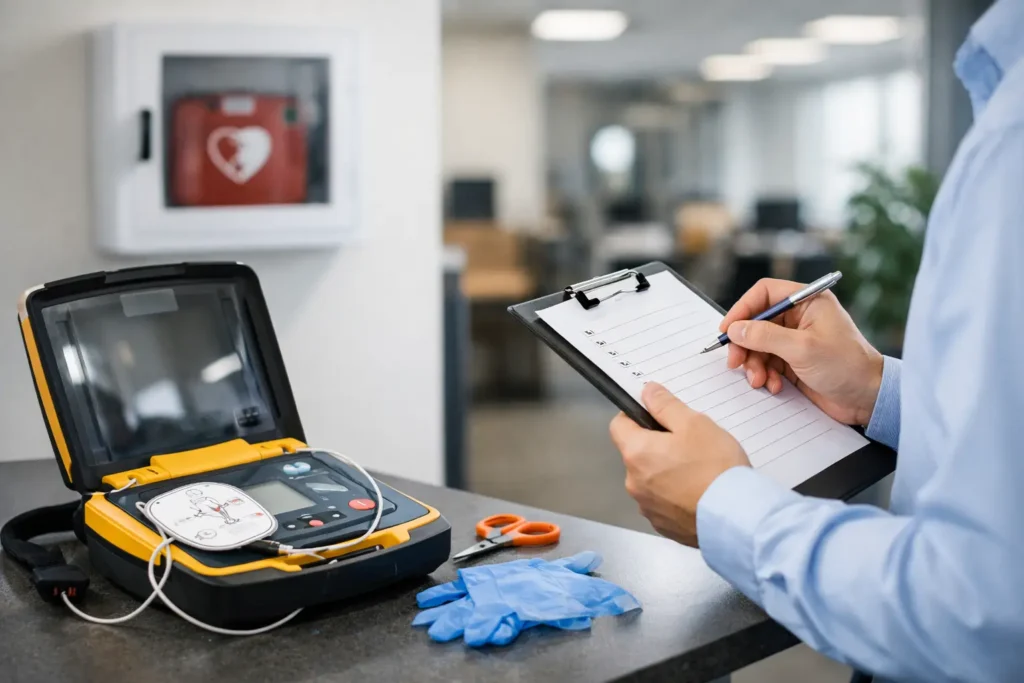
When an AED is mounted on the wall, most organizations feel like the job is done. The harder question comes later: who is making sure that device stays ready, compliant, and supported year after year? That is where an AED service plan review matters. It is less about paperwork and more about whether your team can count on the program when an emergency happens.
For schools, churches, offices, manufacturers, and community facilities, the risk is rarely that no one cares. The risk is assuming someone else is tracking pad expiration dates, battery status, software updates, signage, responder training, and event documentation. Service plans are meant to close those gaps, but not every plan does the same job.
A useful AED service plan review starts with a simple standard: does this plan support operational readiness, not just equipment ownership? That means looking beyond whether the AED was delivered and installed. A service plan should help an organization maintain a usable response program over time.
At minimum, the review should look at inspection support, replacement schedules for pads and batteries, documentation practices, and guidance on post-use readiness. If a device is used in an emergency, the program should make it easy to get that unit back into service quickly. If the plan leaves your staff guessing about what happens next, it is probably too thin.
Training support also matters. An AED program works best when equipment management and staff preparedness are aligned. If employees are trained once and the equipment is maintained on a separate track with no coordination, readiness can drift. The strongest plans make it easier to keep both sides current.
Many organizations discover that their service plan is reactive instead of proactive. It may cover replacement parts only after someone notices a problem. That approach creates avoidable risk, especially in larger facilities or multi-site programs where no single person checks every unit closely.
Another common issue is unclear ownership. The plan may exist, but internal responsibilities do not. Who logs inspections? Who receives expiration notices? Who confirms accessories are in the cabinet? If the service plan does not fit the way your organization actually operates, good intentions can still lead to missed steps.
A third gap is limited support after deployment. Some plans are strong on setup and weak on long-term management. That can be manageable for a small site with one AED and a highly organized point person. It is much harder for schools with multiple buildings, churches with volunteer teams, or employers managing turnover and recurring certification needs.
During an AED service plan review, decision-makers should ask practical questions, not marketing questions. How are expirations tracked, and who gets notified? What happens after the AED is used? Is there help with documentation and readiness records? Does the plan support compliance expectations for your setting, whether that is a workplace, school, ministry, or public-access facility?
It also helps to ask how the provider handles change. Teams change. Facilities expand. Devices age. Guidelines evolve. A strong service plan should be able to adapt without forcing your organization to rebuild the program from scratch.
This is also where industry context matters. A school may need a plan that accounts for athletics, field trips, and multiple campuses. A church may need something simple enough for volunteer leadership to manage confidently. A manufacturer or warehouse may need broader response planning that connects AEDs with trauma supplies, emergency drills, and shift-based training. The best service plan is not always the most complex one. It is the one that matches your environment.
Budget matters, but the cheapest service plan is not always the most affordable over time. If a low-cost plan still leaves staff manually tracking expirations, replacing missing accessories late, or scrambling after an incident, the savings can disappear quickly. The real value is in reducing administrative burden while improving readiness.
That said, not every organization needs a high-touch plan. A small office with one AED and a dependable internal coordinator may do well with a lighter support model. A district, multi-site employer, or public-facing facility usually benefits from more structure. This is one of those areas where it depends on the number of devices, the complexity of the site, and the capacity of the people managing the program.
A good review compares plan cost to the work it removes from your team. If the plan makes inspections easier, keeps records organized, and helps prevent readiness lapses, it is doing more than covering supplies. It is supporting risk management.
Some organizations should review their plan sooner rather than later. That includes programs with expired or soon-to-expire pads and batteries, sites that have had staff turnover, locations with multiple AEDs but no centralized tracking, and facilities that have added training over time without updating equipment oversight.
It is also wise to review the plan after any AED use, facility move, renovation, or policy change. Those moments tend to expose weak spots in communication and process. If your team is not sure who manages the AED program today, that alone is a reason to review it.
For many organizations, the right next step is not replacing everything. It is tightening the system around what you already have. An experienced partner can help connect equipment placement, training schedules, and ongoing AED management so nothing important falls through the cracks.
Square One Medical works with organizations that need that kind of practical support, especially when AED readiness is part of a larger workplace, school, or community safety plan.
The best service plan is the one your team can actually maintain with confidence. If your current program depends on memory, scattered emails, or one overextended staff member, a review is not extra work. It is how preparedness becomes reliable.