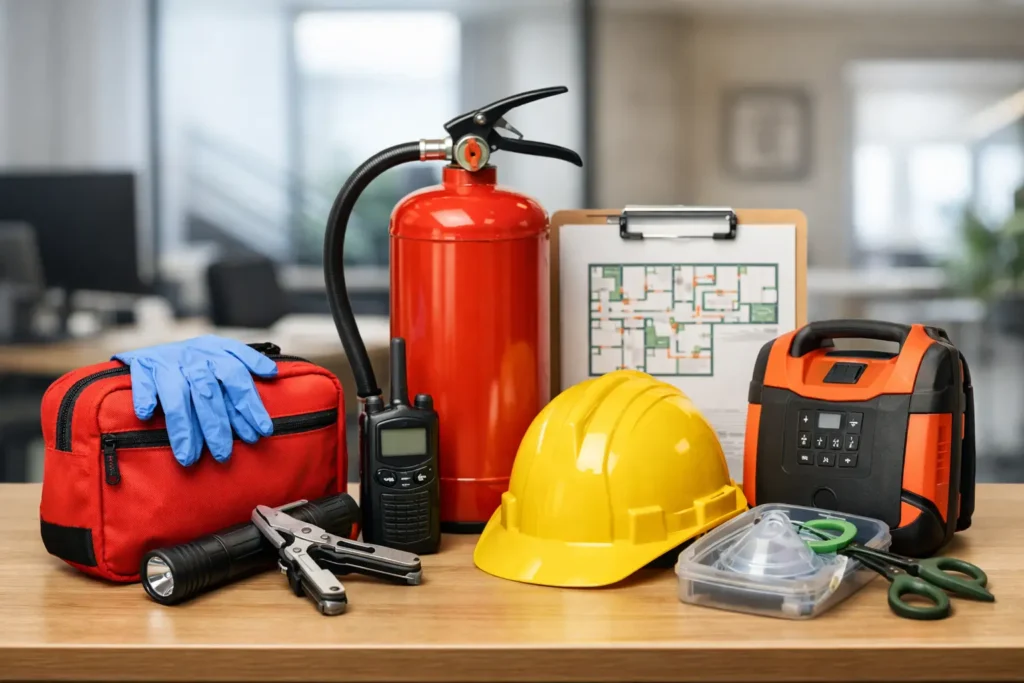
When a medical emergency happens at work, the first few minutes shape the outcome. That is why the conversation around top workplace emergency response tools should start with one practical question: if someone collapses, bleeds heavily, or overdoses on site, what can your team reach for right away, and will they know how to use it?
For most organizations, emergency readiness is not about filling a closet with supplies. It is about choosing tools that match the risks in the building, placing them where people can access them quickly, and making sure staff are trained and supported over time. The strongest programs are built around that full picture.
The best tools do two jobs at once. They help responders act during a crisis, and they make emergency planning easier before a crisis ever happens. In a workplace, that usually means equipment that is visible, easy to use, and supported by a clear maintenance process.
There is also a trade-off to keep in mind. More equipment is not always better. If supplies are stored in the wrong place, left uninspected, or chosen without training in mind, even high-quality gear can fall short. A smaller, well-managed setup often performs better than a larger program with no ownership behind it.
If you are prioritizing the top workplace emergency response tools, an AED belongs near the top of the list. In sudden cardiac arrest, every minute matters. An AED gives bystanders a way to respond before EMS arrives, and modern devices are designed to guide users with clear voice and visual prompts.
For workplaces, the real question is not just whether an AED is present. It is whether the device is placed where it can be reached fast enough, whether pads and batteries are current, and whether staff know where it is and feel comfortable stepping in. That is where AED program management becomes essential. Placement, inspections, replacement schedules, and responder training all affect readiness.
Different environments may need different deployment plans. A single office suite may need one centrally located unit, while a school campus, manufacturing floor, church building, or police facility may require multiple devices based on layout, occupancy, and response time.
Not every workplace emergency is cardiac. Severe bleeding from machinery, falls, accidents, or violence requires a different response, and often a faster one than a standard first aid kit can support. That is why trauma kits and bleeding control supplies have become central workplace tools.
A well-equipped trauma kit may include tourniquets, pressure dressings, gauze, gloves, and shears. What matters most is that the contents are practical for real emergencies and that likely responders understand the basics of bleeding control. In higher-risk settings such as industrial facilities, event venues, schools, and houses of worship, this is often a necessary layer of preparedness rather than an optional one.
Some organizations now include overdose response supplies as part of their workplace emergency setup, especially in facilities that serve the public or experience high foot traffic. Depending on the environment, an overdose response cabinet can help teams act quickly while keeping supplies protected, visible, and organized.
This is an area where risk assessment matters. Not every workplace has the same exposure, but many schools, community organizations, churches, and public facilities are rethinking what emergency response should cover. If overdose response is part of the plan, staff training and policy guidance should be treated just as seriously as the equipment itself.
A basic first aid kit is one of the most familiar emergency tools, but many organizations rely on kits that are too generic for their actual needs. An office, warehouse, school, and athletic facility will not use supplies the same way.
The better approach is to stock first aid kits based on the work being done, the number of people on site, and the likely injuries that could occur. Then assign someone to inspect and restock them regularly. A kit that is half empty or tucked in a locked room is less useful than most teams realize.
Storage may not sound like lifesaving equipment, but it directly affects whether equipment gets used in time. AED cabinets, overdose response cabinets, and marked trauma kit locations help responders find what they need without delay.
Signage is especially important in larger buildings and multi-use facilities. If a visitor, teacher, coach, or staff member cannot immediately identify where an AED or trauma kit is located, valuable time is lost. The top workplace emergency response tools should be easy to see, easy to access, and placed with actual movement patterns in mind.
Many organizations do a good job installing emergency equipment and a weaker job maintaining it. Pads expire. Batteries age out. Seals get broken. Supplies are used and never replaced. Readiness drops quietly unless someone is watching it.
That is why tracking systems, routine inspections, and managed replacement schedules belong on this list too. They are not dramatic, but they are what keep emergency tools functional when they are needed most. For AED programs in particular, ongoing management is often the difference between having a device on the wall and having a device that is truly ready.
Training is not separate from equipment. It is part of the equipment strategy. CPR, AED, first aid, and emergency response instruction give employees the confidence to use what is available instead of waiting for someone else to act.
This is where many organizations see the biggest improvement. Staff do not need to become medical professionals, but they do need simple, practical instruction tied to the actual tools in their building. Onsite training can be especially useful because it allows teams to learn in the spaces where an emergency could happen, with the same AEDs, trauma kits, and response pathways they would use in real life.
The right setup depends on your environment. A low-risk office may focus on AED coverage, first aid, and staff CPR training. A manufacturing site may need stronger trauma support and more distributed equipment. A school or church may need emergency tools planned around public access, after-hours use, and larger groups moving through the building.
It also helps to think in terms of systems instead of products. What emergencies are most likely here? How long would EMS take to reach the patient? Who is present during the day, evenings, or weekends? Who checks supplies, replaces expired items, and coordinates training? Those questions usually lead to better decisions than simply choosing equipment off a standard checklist.
Organizations that work with one partner for training, AED placement, support, and replenishment often find the process easier to manage. For teams that do not have time to coordinate multiple vendors or chase expiration dates, that support can remove a lot of friction.
Preparedness works best when it feels usable, not overwhelming. The right emergency response tools give your team a clear next step when seconds count, and that kind of clarity is what helps people act.