
Now for a limited time, trade in your old AED for a generous rebate toward a new unit!
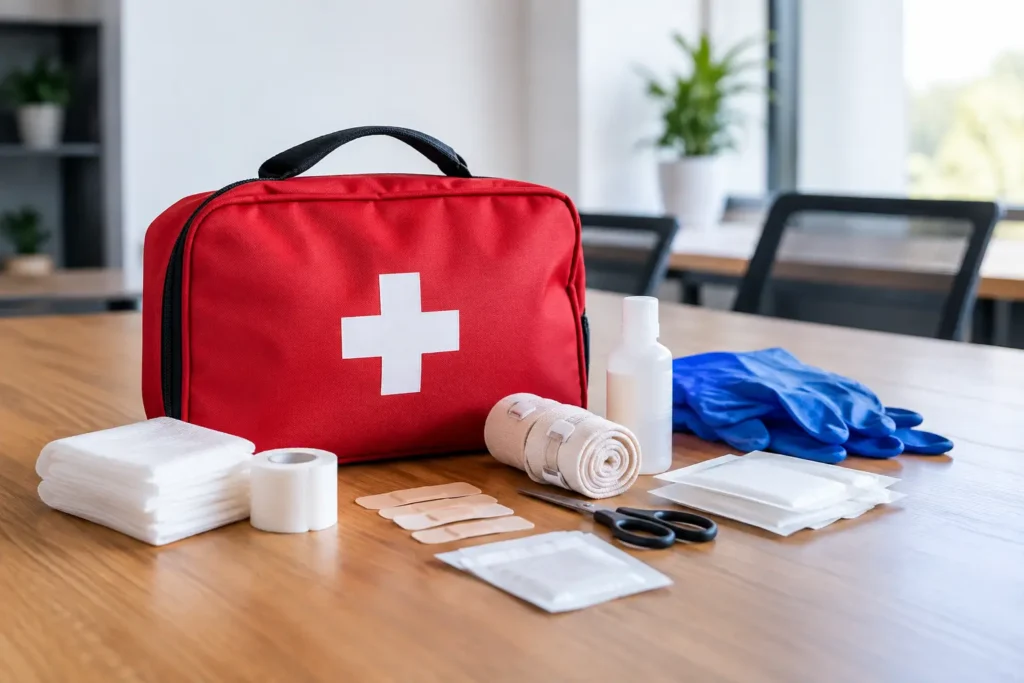
A serious bleeding emergency can become life-threatening before EMS arrives. Trauma kits give trained staff immediate access to the supplies needed to control severe bleeding, protect themselves, and support an injured person during those critical first minutes. For workplaces, schools, churches, and public-facing facilities, they are a practical part of a larger emergency response plan.
A kit alone is not the plan. It must be placed where people can reach it quickly, stocked with appropriate supplies, checked regularly, and supported by training that helps staff act with purpose rather than panic.
Trauma kits, sometimes called bleeding control kits, are designed for injuries that exceed the capabilities of a standard first aid kit. They are intended to help responders address life-threatening external bleeding from incidents such as machinery accidents, falls involving sharp materials, severe lacerations, vehicle-related incidents, violence, or disasters.
Most everyday first aid kits include adhesive bandages, antiseptic wipes, and minor wound supplies. Those items are useful, but they are not designed for rapid hemorrhage control. A properly configured trauma kit focuses on supplies that can be used to apply direct pressure, pack a wound when appropriate, and restrict blood flow to a limb when severe bleeding cannot be controlled otherwise.
The goal is not to turn employees, teachers, ushers, or coaches into medical professionals. The goal is to give designated responders and nearby adults the tools and confidence to take reasonable, trained action while someone calls 911 and emergency responders are on the way.
The exact contents should reflect the facility, its risks, and the number of people present. A manufacturing floor with machinery exposure may need a different setup than an elementary school or a worship facility. Still, effective trauma kits commonly include these core supplies:
Tourniquets deserve special attention because they are often misunderstood. When used for life-threatening bleeding from an arm or leg, a commercial tourniquet can be a lifesaving intervention. Improvised devices and belts are not reliable substitutes. Organizations should select recognizable, purpose-built equipment and train staff on when and how to use it.
Some organizations also benefit from adding supplies based on their setting. Law enforcement, athletic programs, industrial operations, and remote worksites may need expanded resources. The best approach is to assess realistic risks rather than simply choosing the largest kit available.
Placement determines whether a trauma kit will be useful in an emergency. A well-stocked kit locked in a manager’s office, buried in a supply closet, or stored behind a reception desk after hours may be difficult to access when seconds matter.
Start by considering where serious injuries are most likely to occur and where people naturally gather. In a workplace, that may include production areas, loading docks, break rooms, maintenance shops, and main entrances. Schools may place kits near gyms, cafeterias, nurse offices, athletic fields, and high-traffic hallways. Churches and community centers should consider sanctuaries, fellowship areas, classrooms, kitchens, and outdoor activity spaces.
Visibility matters. Wall-mounted cabinets, clear signage, and consistent placement help people find supplies without searching. Kits should also be accessible during normal operating hours and events, not just when administrative staff are present.
A useful rule is to place bleeding-control supplies alongside other emergency resources whenever practical. Employees already know to look for a fire extinguisher, first aid kit, or AED cabinet. Creating a visible emergency response location makes it easier for staff and visitors to remember where help is available.
A cardiac emergency and a severe bleeding emergency require different tools, but the organizational preparation is very similar. Both demand clear placement, routine inspections, staff training, written response procedures, and a plan for calling 911.
For that reason, many organizations incorporate trauma kits into their broader AED program. An AED cabinet or designated response station can become a familiar point of reference for emergencies, provided each item remains easy to identify and access. The key is to avoid clutter. Staff should know exactly what equipment is present, who is expected to retrieve it, and what to do once it arrives.
Training can reinforce this coordination. During CPR and AED instruction, organizations can discuss how to activate EMS, direct someone to retrieve emergency equipment, manage bystanders, and communicate with first responders. Bleeding-control training adds the hands-on skills needed to use trauma supplies correctly under stress.
This integrated approach also simplifies maintenance. Rather than treating emergency equipment as a one-time purchase, safety coordinators can establish a regular inspection process for AED pads and batteries, first aid supplies, trauma kit contents, cabinet condition, and signage. Expired, damaged, or missing supplies should be replaced promptly.
People do not need perfect recall to help in an emergency, but they do need a simple framework. Call 911. Get the trauma kit. Put on gloves if available. Apply direct pressure. Use a tourniquet for life-threatening limb bleeding when indicated. Continue to follow dispatcher instructions until EMS arrives.
Hands-on training makes those steps more usable. Participants can practice opening a kit, locating supplies, applying a commercial tourniquet, packing a simulated wound, and communicating clearly with others. That practice matters because a sealed package can look unfamiliar when someone is under pressure.
Organizations should also identify who is most likely to respond first. This may include safety team members, security personnel, supervisors, teachers, coaches, facility staff, or trained volunteers. However, a response plan should not rely on one person always being present. Train enough people across shifts, departments, and locations so coverage remains realistic.
Trauma kits need less technical maintenance than AEDs, but they still require attention. Assign a specific person or team to inspect each kit on a documented schedule. Monthly or quarterly checks can work well depending on the environment, use rate, and organizational policy.
Inspect the cabinet or bag, confirm the kit is visible and accessible, and check that critical supplies are present, sealed, and within their expiration dates. Replace items used in training or actual incidents immediately. It is also wise to verify that instructions remain legible and that employees know whom to notify when supplies are used.
For organizations managing multiple locations, consistency reduces errors. Use the same kit configuration where possible, label cabinets in the same way, and keep an inventory record that identifies each location. A dependable partner can help align trauma kits with CPR, AED, first aid, and ongoing equipment-management needs so readiness does not become another disconnected task.
Preparedness is most effective when it is visible, practiced, and maintained. A trauma kit placed thoughtfully today may give someone nearby the means to make a meaningful difference before professional help arrives.