
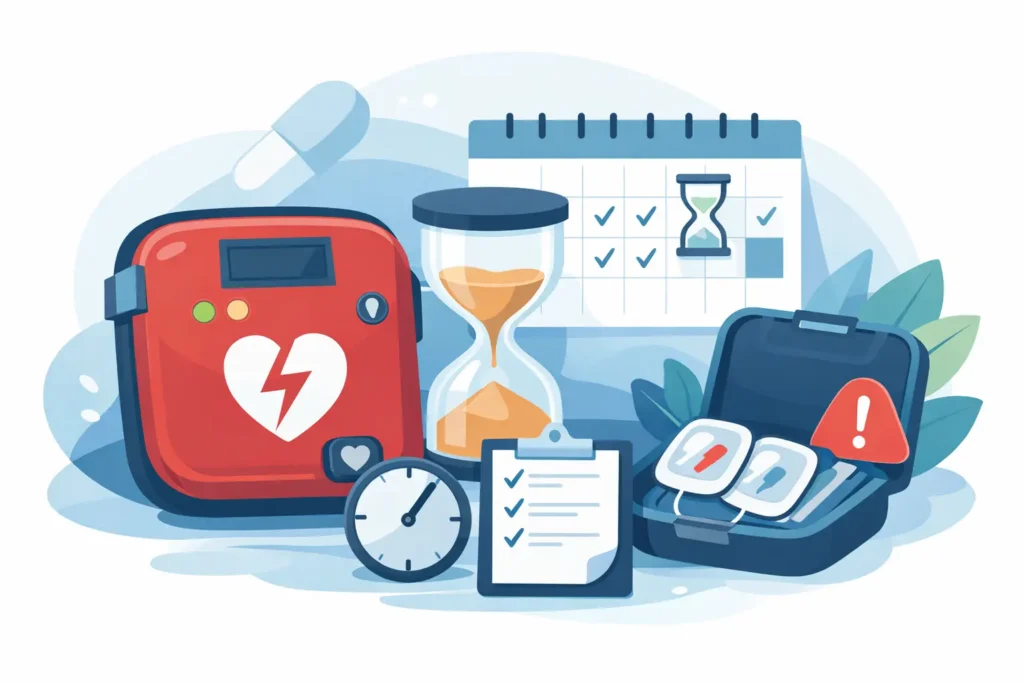
An AED can sit quietly on the wall for years, right up until the moment someone needs it. That is why knowing how to manage AED expirations is not an administrative detail. It is part of keeping your emergency response plan real, usable, and ready.
For most organizations, the challenge is not buying the AED. It is staying ahead of the small items that make the device deployable, especially electrode pads and batteries. Schools, offices, churches, gyms, and public facilities often have the best intentions, but expiration dates get buried in spreadsheets, turnover happens, and replacement orders are delayed. A device that looks ready may not be fully ready at all.
When people talk about AED readiness, they usually focus on the device itself. In practice, the most common issue is expired consumables. Pads have a shelf life because the gel and packaging can degrade over time. Batteries also expire or age out based on the manufacturer and model, even if the AED has never been used.
That does not always mean an expired component will fail instantly on the expiration date. But emergency preparedness should not rely on gray areas. If a cardiac emergency happens in your building, your team should not have to wonder whether the pads will adhere properly or whether the battery has enough life left to support a rescue.
There is also a compliance and liability side to this. If your organization represents that an AED is available, maintaining it is part of the responsibility. For workplaces, schools, churches, and community sites, expiration management supports both readiness and confidence.
The best system is the one your team will actually maintain. It does not need to be complicated, but it does need ownership, visibility, and a regular review schedule.
Start by creating a complete AED inventory. Include each AED location, model, serial number, battery expiration date, pad expiration date, pediatric pad date if applicable, and the date of the last inspection. If you manage multiple buildings, avoid keeping this information only at the site level. Central visibility matters, especially when staffing changes.
Next, assign one person as the primary owner and one backup. This step is often overlooked. When everyone is responsible, no one is really responsible. The owner may be a safety coordinator, office manager, school nurse, facilities lead, HR manager, or church administrator. What matters is that someone is clearly accountable for checking dates and initiating replacements.
Then build in reminders well before expiration. Thirty days can be too late if purchasing approvals, shipping times, or budget cycles slow things down. Ninety days is a safer lead time for most organizations. For larger AED programs, six months can be even better, especially if several devices use different consumables.
If your current process only tracks the AED cabinet on the wall, it is too limited. A workable program should track the device and the supplies that make it usable.
At a minimum, your records should include adult pad expiration dates, battery expiration dates, pediatric pad dates if those are stored with the unit, and any accessories tied to your response protocol. If your team keeps a rescue kit with gloves, a razor, trauma shears, a barrier mask, or prep materials, those items should be reviewed during inspections as well.
Some organizations also forget to account for used supplies. If an AED is deployed, even during a false alarm or training mix-up, the pads may need replacement immediately. Depending on the model and the event, other components may need to be checked too. Expiration management is not just about calendar dates. It is also about knowing what changed after use.
Monthly visual checks are a practical standard for many facilities. During that check, confirm the AED status indicator shows the unit is ready, verify pads and batteries are in date, and make sure the rescue kit is complete. Also confirm the cabinet is accessible and the device has not been moved or obstructed.
Some environments need closer attention. A school with multiple campuses, a manufacturing site with dust or temperature variation, or a church with several volunteers sharing oversight may benefit from more structured checklists and documentation. In lower-risk office settings, monthly checks may be enough, but only if they are done consistently.
The trade-off is simple. A very detailed process can become hard to sustain, while a loose process gets missed. The right balance depends on the size of your program, the number of devices, and how many people are involved.
Most expiration problems come from ordinary operational gaps, not neglect. One common issue is assuming the AED performs all readiness checks automatically. Self-tests are helpful, but they do not replace supply tracking. The device may detect some conditions, but it cannot solve an expired pad order that was never placed.
Another problem is storing replacement pads or batteries without labeling them clearly. Teams may think they have backup supplies on hand, only to realize those backups are expired too. It is also common for organizations to replace one component and forget another. For example, adult pads get reordered, but pediatric pads in the carry case are overlooked for another year.
Mergers, office moves, staffing changes, and school year turnover can create blind spots too. If AED responsibility changes hands without a formal inventory review, expiration dates are easy to miss.
A spreadsheet can work well for a small AED program if someone actually owns it and reviews it monthly. For one or two devices in a stable setting, that may be all you need. The weakness is that spreadsheets depend heavily on follow-through. If the file lives on one person’s desktop or reminders are not shared, the system breaks down fast.
Digital AED management tools offer more structure. They can centralize records, issue reminders, and make multi-site oversight easier. For organizations with several devices, rotating staff, or multiple departments involved in safety, that extra visibility can save time and reduce mistakes.
There is no single right answer here. The better question is whether your current method reliably tells you what is expiring, where it is located, and who is replacing it.
AED expiration tracking works best when it is part of a larger readiness plan. That means pairing equipment oversight with CPR and AED training, documented inspections, clear emergency roles, and a process for post-incident replacement. If your team knows how to respond but the equipment is outdated, the plan has a gap. If the equipment is current but no one is trained, the gap still exists.
This is where a full-service approach helps many organizations. Managing training, equipment, replacement schedules, and program oversight through one partner reduces the handoff problems that often cause expired supplies to slip through.
If you want a practical way to manage AED expirations, think less about the date itself and more about the system around it. The goal is not perfect paperwork. The goal is that when someone opens that cabinet, everything inside is ready to help save a life.